

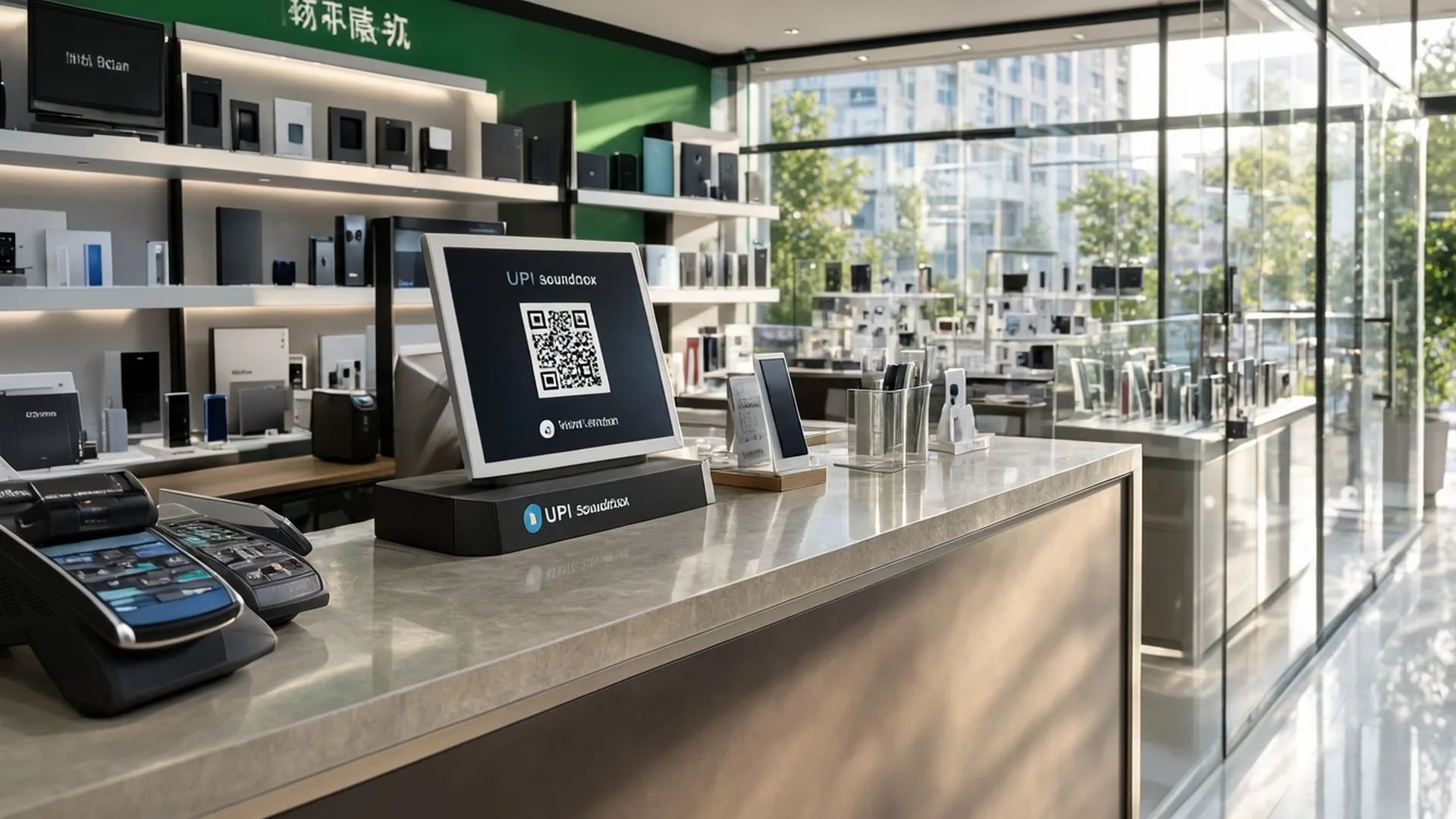
Walk up to an electronics showroom, a neighbourhood chemist, or a highway petrol pump with a ₹5,000 bill, and you can already sense the quiet tension around digital payments. While consumers still expect Unified Payments Interface (UPI) to remain free forever, payment aggregators and banks have spent 2026 lobbying the Ministry of Finance to reintroduce a modest Merchant Discount Rate (MDR)—widely discussed in the 0.3% to 0.4% band—on large-merchant UPI transactions above ₹2,000. Even though the government deferred any immediate MDR rollout on standard bank-account UPI in October 2026, commercial fees already apply on ₹2,000+ payments routed through RuPay Credit Cards on UPI and Prepaid Payment Instrument (PPI) wallets under National Payments Corporation of India (NPCI) circulars.
To a shopper, a 0.4% merchant fee sounds negligible—just ₹8 on a ₹2,000 purchase, or ₹40 on a ₹10,000 bill. To a retailer, however, fees are not paid out of gross revenue; they are paid straight out of net profit. Under Section 10A of the Payment and Settlement Systems Act, 2007, shops cannot legally tack an illegal "UPI surcharge" onto a standard bank-account UPI bill, and packaged-goods sellers cannot breach printed Maximum Retail Price (MRP). Instead, any 0.4% fee—or 0.472% once 18% GST on merchant acquiring services is added for businesses that cannot claim Input Tax Credit under CBIC GST rules—pushes low-margin retailers to recover the cost quietly by cutting cash discounts, nudging unbranded service quotes up by 1% to 2%, or asking shoppers to split bills under ₹2,000 (all statutory positions, tax rules, and margin simulations below reflect the framework as of 21 November 2026).
1. What Is Actually Charged Today vs What a 0.4% Fee Would Change
Before examining which shopkeepers feel the squeeze, it helps to separate what is legally in force today from what remains a deferred policy proposal:
| UPI Payment Rail (Transactions Above ₹2,000) | Current Merchant Fee Status (As of 21 Nov 2026) | Effective Cost to Merchant (Incl. 18% GST if No ITC) | Can the Shop Charge You a Separate Surcharge? |
|---|---|---|---|
| Bank-Account UPI (Savings/Current A/c) | 0% MDR in force (Section 10A PSS Act; Oct 2026 MDR proposal deferred) | ₹0 today (0.400%–0.472% under a 0.4% MDR scenario) | No. Strictly prohibited under Section 10A |
| PPI Wallet on UPI (>₹2,000) | Up to 1.1% interchange (NPCI/UPI/OC No. 147/2022-23; lower caps on fuel/utilities/supermarkets) | Paid by merchant acquirer to wallet issuer (0.5%–1.1% + GST) | No separate customer fee on UPI rail; merchants may disable wallets |
| RuPay Credit Card on UPI (>₹2,000) | Commercial MDR (approx. 1.5%–2.0%) at large merchants (0% up to ₹2,000 for small merchants) | approx. 1.77%–2.36% if non-ITC; approx. 1.50%–2.00% if ITC claimed | No separate surcharge permitted under network rules; merchants often disable CC-on-UPI |
The Hidden GST Wedge: Why 0.40% Becomes 0.472% for Specific Shops
Payment acquiring and gateway fees are financial services taxed at 18% GST under CBIC schedules. That creates an uneven playing field across Indian retail sectors:
- GST-Regular Retailers (Electronics, Apparel, Supermarkets): A 0.40% MDR generates a 0.072% GST charge (₹40 fee + ₹7.20 GST on a ₹10,000 bill). Because these shops charge GST on sales and file regular returns, they claim Input Tax Credit (ITC) on the ₹7.20—keeping their real P&L cost at 0.400%.
- Non-GST, Exempt & Composition-Scheme Counters (Fuel Pumps, Clinics, Hospitals, Standalone 5%-GST Restaurants, Exempt Grain Traders): Because petrol and diesel sit outside GST, healthcare services are GST-exempt, and standalone restaurants (5% slab) plus Composition dealers are legally barred from claiming ITC, that 18% GST becomes a permanent cost—locking their effective fee at 0.472%.
2. Step-by-Step Mathematical Comparison: Profit Erosion Across Five Indian Shop Types
Whether a shop quietly absorbs a 0.4% merchant fee or raises prices depends on one ratio: what percentage of the shop's net profit margin does the fee consume?
Simulation Parameters
- Illustrative Checkout Bill: ₹10,000 (representing a single high-ticket ₹2,000+ transaction, or a standardised slice of ₹1,00,00,000 / ₹1 Crore in annual UPI sales above ₹2,000).
- Assumed Merchant Fee Scenario: 0.40% base MDR (₹40.00 per ₹10,000) + 18% GST (₹7.20 per ₹10,000) = ₹47.20 gross deduction.
- Sector Net Profit Margin Benchmarks (Pre-MDR):
- Petrol Pump / Fuel Station: 1.2% net margin (non-GST; no ITC ➔ 0.472% effective fee).
- Smartphone / Consumer Electronics Dealer: 3.0% net margin (GST regular; ITC claimed ➔ 0.400% effective fee).
- Supermarket / Bulk Kirana Store: 3.5% net margin (GST regular; ITC claimed ➔ 0.400% effective fee).
- Independent Clinic / Diagnostic Centre: 12.0% net margin (GST-exempt healthcare; no ITC ➔ 0.472% effective fee).
- Branded Apparel / Footwear Store: 16.0% net margin (GST regular; ITC claimed ➔ 0.400% effective fee).
Plain-Text Formula Used
Net Profit Wiped Out (%) = (Effective Post-ITC MDR ÷ Merchant Net Profit Margin) × 100
Arithmetic Outcomes (OneMint Calculation)
| Indian Retail Category (Per ₹10,000 Sale / ₹1 Cr Annual >₹2k UPI Volume) | Typical Net Margin | Net Profit on ₹10,000 Bill | Effective Fee (0.40% or 0.472% w/o ITC) | Share of Net Profit Wiped Out | Annual Fee Drag on ₹1 Cr >₹2k UPI Sales | Quiet Price-Hike Likelihood |
|---|---|---|---|---|---|---|
| Petrol Pump / Fuel Dealer (No ITC) | 1.2% | ₹120.00 | ₹47.20 | 39.33% | ₹47,200 (vs ₹1.20L profit) | Extreme (or UPI pushback) |
| Electronics / Smartphone Shop (ITC) | 3.0% | ₹300.00 | ₹40.00 | 13.33% | ₹40,000 (vs ₹3.00L profit) | High (cuts store discounts) |
| Supermarket / Bulk Kirana (ITC) | 3.5% | ₹350.00 | ₹40.00 | 11.43% | ₹40,000 (vs ₹3.50L profit) | Moderate–High (loyalty/discount trim) |
| Clinic / Diagnostic Lab (No ITC) | 12.0% | ₹1,200.00 | ₹47.20 | 3.93% | ₹47,200 (vs ₹12.00L profit) | Low–Moderate (rounds fee slabs up) |
| Branded Apparel / Footwear (ITC) | 16.0% | ₹1,600.00 | ₹40.00 | 2.50% | ₹40,000 (vs ₹16.00L profit) | Very Low (absorbed in margin) |
Variance Callout: The exact same 0.40% headline fee hits a highway petrol pump 15.7 times harder in profit terms (39.33% of net profit destroyed) than a branded apparel store (2.50% of net profit), and 5.3 times harder at a smartphone retailer (13.33%) than at a clothing chain. Note also that a standalone neighbourhood restaurant paying 5% GST without ITC faces a 0.472% fee—eating roughly 2.95% of a 16% net margin, still small enough that most mid-range restaurants absorb it rather than reprinting menus for 40 basis points.
Note on Constants: Net margins vary significantly by city rent, franchise structure, and inventory turnover. Plain 24K gold coin counters (net margin 1.5%–3.0%) sit right alongside electronics dealers in high fee sensitivity, whereas heavy bridal jewellery counters earning 14%–20% making charges sit closer to branded apparel in absorption capacity.
3. Why a 0.4% Fee Turns Into a 1% to 1.2% Quiet Price Increase for Buyers
If a shop cannot legally print "UPI Convenience Fee: 0.4%" on your receipt—and cannot sell packaged goods above printed MRP—how does that ₹40-per-₹10,000 cost actually show up in your household budget? Through discount compression and psychological rounding, which almost always costs the consumer more than 0.4%:
Advertisement
- Discount Trimming on MRP-Capped Goods (Chemists & Electronics): Under India's Legal Metrology (Packaged Commodities) Rules and drug price ceilings, a retail chemist or mobile shop cannot charge above printed MRP. Instead, they compete by offering 10%–15% off MRP on monthly chronic medicines or ₹500–₹1,000 off online-matched smartphones. Watch the math on a ₹3,000 monthly family medicine bill previously discounted by 15% (payable: ₹2,550):
- At 0.40% MDR, the chemist's net fee on ₹2,550 is just ₹10.20 (₹12.04 if non-ITC).
- Nobody advertises a "14.6% discount." The chemist simply trims the counter discount tier from 15% down to 14% (payable: ₹2,580).
- Your bill rises by ₹30.00 (+1.18%)—2.94 times the chemist's actual ₹10.20 fee.
- Base-Rate Rounding on Unbranded & Service Bills: Local furniture shops, car-service garages, diagnostic packages, opticians, and gold making-charge quotes have no statutory MRP. When payment costs rise by 0.472%, a ₹4,000 car service or lab panel does not get repriced to ₹4,019; it rounds up to ₹4,050 or ₹4,100 (+1.25% to +2.50%) at the next quarterly price-card update.
- The "Cash-Only Extra Discount" Workaround: While adding a surcharge for UPI is prohibited, offering an incentive for cash or direct NEFT/IMPS bank transfers on ₹25,000+ purchases (such as laptops, TVs, appliances, and home-renovation tiles) is already widespread in Tier-1 and Tier-2 markets. A 0.4% MDR widens that cash-vs-digital discount gap on high-ticket goods.
- The ₹2,000 Split-Billing Cliff: Any flat threshold at ₹2,000 creates an immediate billing distortion: a ₹1,999 UPI payment costs the merchant ₹0, whereas a ₹2,001 payment triggers ₹8.00 to ₹9.44 (if levied on the full transaction value). That cliff encourages cashiers at mid-sized grocery and hardware stores to ask regular customers to scan two ₹1,500 QR codes instead of one ₹3,000 transfer.
4. Which Four Categories Will Resist vs Which Three Won't Budge
Sorting your monthly household spend into high-sensitivity and low-sensitivity buckets shows where your bills are actually exposed:
Highest Risk of Quiet Price Nudges or Discount Cuts (Thin Margin + High Ticket >₹2,000):
- Mobile Phones, Laptops & White Goods (₹15,000–₹1,00,000+ tickets): Slim 2%–4% dealer margins mean store-level discounts shrink first; dealers already steer buyers toward bank-funded EMI promos or direct NEFT/IMPS.
- Wholesale Kirana, Hardware, Paint & Building Materials (₹3,000–₹50,000 tickets): Trade-margin businesses operating on 2%–5% net spreads pass payment costs straight into wholesale quotes.
- Retail Pharmacies & Chronic-Care Medicine Counters (₹2,000–₹6,000 monthly refills): Cannot exceed MRP, so they narrow flat discount percentages (15% ➔ 12%–14%) on digital payments.
- Petrol Pumps & Fleet Fuel Stations: Fixed dealer commissions and zero GST Input Tax Credit make a 0.472% fee mathematically unsustainable without OMC reimbursement; fuel stations would either lobby for an explicit exemption (as seen on card/wallet caps) or push cash on high-value fills.
Lowest Risk of Price Increases (Thick Margin or Already Priced for Cards):
- Branded Apparel, Lifestyle & Department Stores: Already bake 1.5%–2.0% credit card MDR into their 50%+ gross margins; a 0.4% UPI fee is still cheaper than cards.
- Mid-to-Fine Dining Restaurants & Hotels: High ticket sizes and healthy gross food margins allow easy absorption—and UPI still costs less than credit cards or 18%–25% aggregator commissions.
- Large E-Commerce & Quick-Commerce Platforms: Already recover payment-processing economics through flat ₹5–₹15 "platform fees" and dynamic delivery charges rather than item-level UPI markups.
5. How to Protect Your Wallet on ₹2,000+ Bills in 4 Steps
- Step 1: Know What Is Illegal Right Now. As of November 2026, bank-to-bank UPI remains zero-MDR under Section 10A of the PSS Act. If any shopkeeper demands an extra 1%–2% specifically for scanning a standard UPI QR code, politely ask for the surcharge to be printed as a separate line item on the GST tax invoice (almost no merchant will document an illegal surcharge) and report persistent violations on the National Consumer Helpline (1915 / consumerhelpline.gov.in) or your bank's UPI dispute desk.
- Step 2: Always Ask for the "Net Cash / NEFT Price" on ₹15,000+ Purchases. At electronics, appliance, tyre, and building-material stores, ask upfront: "Is there any difference in final price between UPI, NEFT, and card?" On ₹50,000+ purchases, paying via zero-charge NEFT or RTGS directly from your banking app takes 2 minutes, remains 100% digital and invoice-backed, and eliminates any merchant MDR excuse altogether.
- Step 3: Don't Use PPI Wallets or RuPay Credit Cards Blindly at Thin-Margin Shops. Because PPI wallets (>₹2,000) and RuPay Credit Cards on UPI already carry real merchant fees today, thin-margin shops often withdraw their best cash/store discounts the moment they see a credit-card-linked UPI prompt. Check whether the shop's extra 1%–2% discount beats your credit card's reward rate before scanning.
- Step 4: Keep an Eye on Your Monthly Discount Leakage. On recurring ₹2,500+ grocery and pharmacy bills, compare the final payable rupee total—not just the headline MRP—across two local counters once a quarter to spot quiet 1%–2% discount trims early.
6. What This Does NOT Mean (And What We Don't Know Yet)
What This Does NOT Mean
- A 0.4% UPI merchant fee is NOT a direct charge deducted from your bank account. Even if the government eventually lifts the zero-MDR mandate for large merchants, MDR is historically billed to the merchant by their acquiring bank or payment aggregator—not debited as a fee on the customer's bank statement.
- Small neighbourhood kiranas and street vendors are NOT the target of industry MDR proposals. Nearly every bank and payment-council proposal floated in 2025–2026 explicitly proposes retaining 0% MDR for small merchants (typically defined by GST turnover thresholds such as under ₹40 lakh/year) and for all transactions up to ₹2,000.
- UPI does NOT become more expensive than credit cards under a 0.4% fee. Even at 0.40%–0.472%, UPI would remain roughly three to five times cheaper for merchants than regular Visa/Mastercard/RuPay credit cards (1.5%–2.5% MDR) and cash-handling logistics (counting, pilferage, bank-deposit charges).
What We Don't Know Yet
- Whether and When the October 2026 MDR Deferral Will Be Lifted: As of 21 November 2026, no formal Ministry of Finance / CBDT Gazette notification amending Section 10A / Rule 119AA to introduce a 0.4% MDR on bank-to-bank UPI has been confirmed in force. Any final notification would have to specify the exact rate cap, merchant turnover cutoff, and sector exemptions (such as fuel, healthcare, and utilities).
- Whether a Future ₹2,000 Threshold Would Be Slab-Based or Full-Value: If MDR were levied only on the amount exceeding ₹2,000 (₹0.40 on a ₹2,100 bill) rather than the full ₹2,100 value (₹8.40), the incentive for shopkeepers to ask for split payments would virtually disappear.
Primary Sources & References (Verified as of 21 November 2026)
- Reserve Bank of India / Payment and Settlement Systems Act, 2007: Section 10A prohibiting banks and system providers from imposing direct or indirect charges on prescribed electronic payment modes (BHIM-UPI / UPI QR and RuPay Debit Cards).
- National Payments Corporation of India (NPCI): UPI Operating Circular No. 147/2022-23 governing PPI wallet-on-UPI interchange (up to 1.1% on >₹2,000 merchant transactions with sector caps) and RuPay Credit Card on UPI MDR guidelines.
- Central Board of Indirect Taxes and Customs (CBIC): 18% GST applicable to merchant acquiring/payment gateway fees, and statutory Input Tax Credit exclusions for non-GST petroleum products, GST-exempt healthcare services, Composition Scheme dealers, and 5%-slab standalone restaurants.
- Income Tax Department / Ministry of Finance: Statutory mandate requiring businesses with turnover above ₹50 crore to provide prescribed zero-charge electronic payment facilities.
- Department of Consumer Affairs: National Consumer Helpline (1915 / consumerhelpline.gov.in) for reporting unlawful merchant surcharges.
Advertisement