

When you sit down to reconcile your Annual Information Statement (AIS), Form 26AS, or bank statements ahead of tax and financial deadlines, the temptation to drag and drop your PDF into an AI chatbot and ask "Summarize my capital gains and point out any tax mismatches" takes less than two seconds. As of 25 October 2026, while AI tools have become ubiquitous for parsing complex financial documents under the Income Tax Act, 2025 and SEBI compliance frameworks, uploading unredacted financial records hands commercial AI platforms an unmasked vault of your most sensitive personal data.
Before you upload a single financial document to any web-based AI assistant, running through this five-question privacy and redaction checklist ensures you do not inadvertently breach your own data security or violate institutional confidentiality.
1. The Five-Question Privacy Checklist Before Any Financial AI Upload
Financial documents like an AIS, Form 26AS, ITR worksheet, or six-month bank statement contain a complete behavioral map of your financial life: your Permanent Account Number (PAN), Aadhaar (or masked Aadhaar digits), bank account numbers, IFSC codes, residential address, employer details, exact dividend payout dates, and specific mutual fund transaction folios.
Before letting any commercial AI model process your financial PDF, run through these five audit questions:
| Q# | Privacy Audit Question | The Vulnerable Risk If Answered "No" or "Unsure" | The Safe Technical Solution / Action to Take |
|---|---|---|---|
| Q1 | Are all permanent government identifiers and account numbers completely redacted? | PAN, Aadhaar, and bank account numbers persist in the vector embeddings of the AI vendor's servers indefinitely. | Open the PDF in an offline PDF editor (like Adobe Acrobat, Preview, or open-source desktop tools) and black out PAN, Aadhaar, and account numbers before uploading. |
| Q2 | Does the AI tool's enterprise or consumer data policy explicitly disable model training on user uploads? | Default consumer tiers of popular AI tools use user chat inputs and document uploads to retrain and fine-tune future public models. | Switch off "Chat History & Training" in privacy settings, or use an API/enterprise tier with a zero-data-retention (ZDR) guarantee. |
| Q3 | Is the platform compliant with the Digital Personal Data Protection (DPDP) regime and data localisation norms? | Your unredacted financial records may be transferred, processed, and stored on overseas servers outside Indian legal jurisdiction. | Verify that the AI provider operates under clear data processing agreements (DPAs) or local cloud storage compliant with Indian data laws. |
| Q4 | Can this specific calculation or reconciliation be performed securely on an offline local calculator? | Uploading raw numbers to a cloud server is unnecessary for straightforward arithmetic (like tax brackets or SIP hurdle math). | Use local, verified financial tools—such as OneMint’s offline calculators and calculators on the Income Tax e-Filing Portal. |
| Q5 | Are you uploading documents belonging to third-party clients, family members, or employers? | Uploading employer tax data or client AIS summaries can violate corporate confidentiality agreements and privacy laws. | Never upload third-party financial records to public AI models without explicit written consent and enterprise-grade isolation. |
2. Worked Rupee Math & Data Risk: What a Single Unredacted AIS PDF Reveals
To understand why a raw AIS PDF is a high-risk digital asset, consider what an AI model extracts from an unredacted 25-page PDF downloaded from the Income Tax e-filing portal.
Baseline Parameters & Data Exposure Example
- Document Uploaded: Unredacted Annual Information Statement (AIS) for Tax Year 2026-27 (under the Income Tax Act, 2025).
- Identifiers Exposed: PAN, masked Aadhaar reference, Bank Account Number, Primary Employer Name, Residential Address, and 45 distinct mutual fund and stock dividend credit lines with exact transaction dates and rupee amounts.
- Risk Vector: If the AI platform retains chat histories for model training, future users querying synthetic financial patterns can inadvertently extract structural templates matching your exact income brackets, dividend frequencies, and banking partner relationships.
Conceptual Data Exposure & Privacy Risk Formulas
Total Exposure Score:
Total Exposure Score = Unique Identifiers Exposed × Server Retention Duration (Days) × Third-Party Training AccessMitigated Risk Score (After Redaction):
Mitigated Risk Score (After Redaction) = 0 Identifiers × Zero Retention Mode = Absolute Privacy
Line-by-Line Privacy Audit
- Unredacted Upload Risk: A cloud LLM indexes your PAN and bank numbers. Even if the vendor claims encryption at rest, data breaches, prompt-injection exploits, or future model updates can expose conversational memory containing raw financial linkages.
- The Redacted Alternative: By spending 60 seconds redacting your PAN to
[PAN Omitted], your bank account to[Account Redacted], and masking specific transaction counterparty names while retaining the numerical values needed for tax summation (e.g., changing dividend income rows to generic numbers like Dividend Line 1: ₹12,500), you get 100% of the AI's analytical capability with 0% of the identity exposure (OneMint calculation).
Privacy Variance Callout: Redaction reduces identifiable data leakage risk to zero while preserving full calculation utility. Large language models process abstract numerical tokens identically whether associated with your real name or a sanitized placeholder.
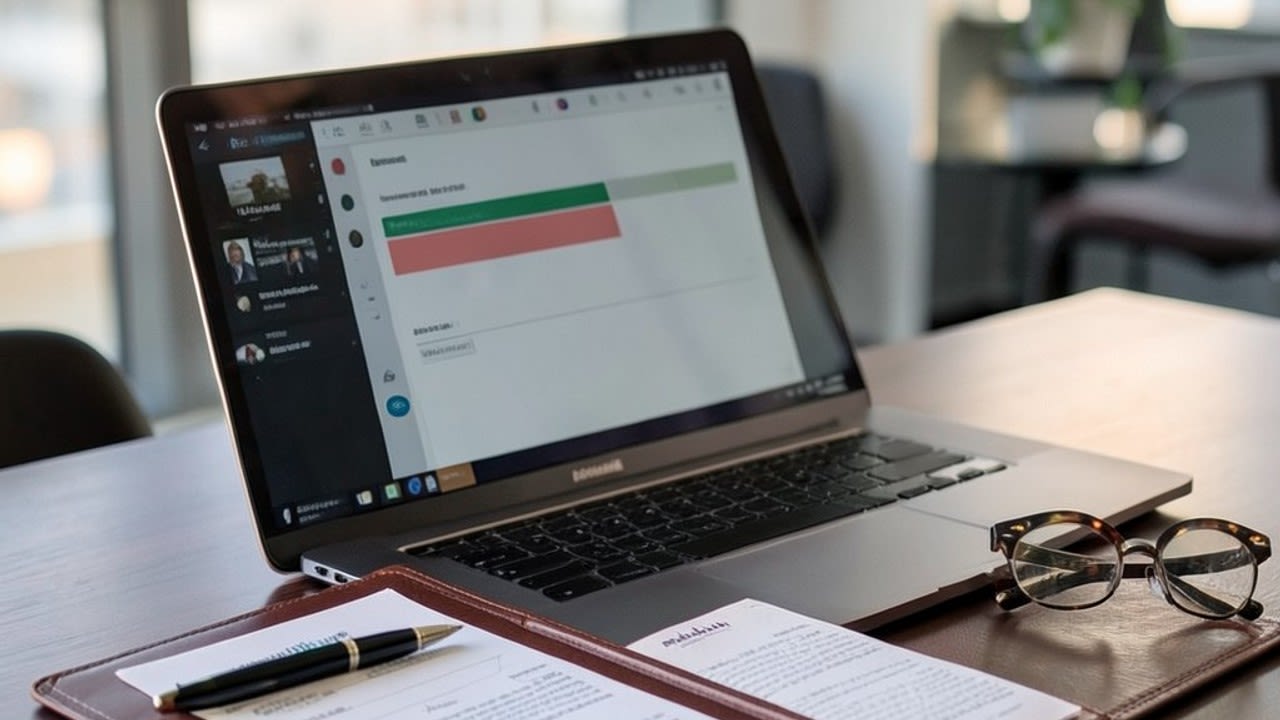
 Figure: A secure privacy-focused workstation displaying an offline document interface. Running local open-source models or using client-side redaction ensures sensitive financial records never enter public AI training pipelines.
3. Epistemic Honesty: Consumer vs. Enterprise AI Tiers & What We Don't Know Yet
Households frequently assume that because they pay a monthly subscription fee for an AI chatbot, their data is automatically private. That assumption is legally incorrect across most consumer platforms:
Consumer Tier vs. Enterprise/API Tier
Standard consumer web chats (even paid tiers) frequently maintain default settings that enable data logging and model training unless manually opted out in privacy settings. True zero-data-retention (ZDR) and privacy guarantees—where data is processed in ephemeral memory and immediately wiped without being written to disk or training pipelines—are typically restricted to Enterprise API tiers or specialized contracts.
Advertisement
Open-Source Local Models (The Ultimate Privacy Shield)
For individuals handling highly sensitive tax and legal documents, running a lightweight open-source model (such as Llama 3 or Mistral variants) locally on a personal laptop via offline interfaces (like LM Studio or Ollama) ensures that zero bytes of your financial data ever leave your machine or touch an external cloud server.
What We Don't Know Yet
- Enforcement Timelines for Specific DPDP Rule Notifications: While the Digital Personal Data Protection Act sets broad compliance standards for data fiduciaries operating in India, the final operational rules, registration thresholds, and penalty enforcement timelines continue to evolve through Ministry of Electronics and Information Technology (MeitY) notifications.
- Third-Party Plugin Data Leakage: When AI tools use third-party document-parsing plugins or web-retrieval extensions, data packets can pass through intermediate server nodes whose data retention and encryption policies may differ from the primary AI vendor.
4. What This Does NOT Mean
- It does NOT mean you cannot use AI for financial learning: Using AI to explain complex tax sections (such as navigating the transition from old section numbers to the Income Tax Act, 2025) or to draft budgeting templates is completely safe—provided you do not paste real personal financial identifiers into the prompt.
- It does NOT mean official government portals are insecure: Downloading your AIS from the official Income Tax e-Filing Portal uses secure government encryption; the vulnerability arises solely when you take that downloaded document and paste it into third-party commercial AI tools.
- It does NOT mean redaction ruins the AI's usefulness: AI models do not need to know your real PAN, name, or bank account number to calculate your capital gains, sum your dividend columns, or check your tax slab calculations.
5. Actionable Reader Execution Block: Your 3-Step Secure AI Financial Audit
Before using any AI tool to analyze your taxes, investments, or bank statements, execute this secure 3-step workflow:
- Scrub and Redact the PDF Offline: Open your AIS, Form 26AS, or bank statement PDF in an offline desktop tool. Use the redaction box (black rectangle) to permanently black out your PAN, Aadhaar, account numbers, and home address. Save the redacted file as
Tax_Summary_Redacted.pdf. - Toggle Off Model Training in Settings: Go to your AI tool's "Settings" → "Data Controls" / "Privacy", and turn off "Improve the model for everyone" or "Chat History & Training". If the platform offers a temporary chat mode, enable it.
- Use Verified Local Tools for Core Financials: For reliable calculations, avoid unverified AI hallucination risks by using OneMint's verified offline tools on the Tools page—such as the Income Tax Calculator, SIP Calculator, and Home Loan EMI Calculator—or official calculators on government portals.
6. Frequently Asked Questions (FAQ)
1. Is it safe to upload my AIS or ITR to an AI tool if I have a paid subscription?
Not automatically. Most paid consumer AI subscriptions still retain chat logs and uploaded files for quality tuning and model training unless you explicitly disable data sharing in your account's privacy settings or use an enterprise API tier with zero-data-retention guarantees.
2. What specific details must I redact from a financial statement before sharing it with an AI?
You should permanently redact your PAN, Aadhaar number, bank account numbers, IFSC codes, residential address, employer name, and exact contact details. You do not need to redact numerical financial figures (like income amounts or tax deductions) if you want the AI to calculate totals.
3. Does running an open-source AI model locally on my laptop protect my financial data?
Yes. Running an open-source model (like Llama or Mistral) locally via software like Ollama or LM Studio means all data processing happens entirely on your device's RAM and CPU/GPU, with zero internet connectivity required and zero data sent to external servers.
4. Can an AI tool hallucinate incorrect tax calculations on my uploaded AIS data?
Yes. Large language models are probabilistic text generators and can occasionally misread columns, miss negative signs, or hallucinate tax liabilities. Always cross-verify AI-assisted tax summaries against official computations on the Income Tax e-Filing Portal.
5. How does the DPDP regime apply to AI tools processing Indian citizens' financial records?
The Digital Personal Data Protection (DPDP) Act requires data fiduciaries to obtain explicit consent, process data solely for stated purposes, and implement robust security safeguards against data breaches, holding platforms accountable for unauthorized data harvesting.
6. Where can I check official tax rules and calculations securely without AI tools?
You can access secure, government-backed calculators and tax filing guidelines directly on the official Income Tax India Portal (incometax.gov.in) or use verified calculators on trusted knowledge platforms like OneMint.
Primary Sources & References (Verified as of 25 October 2026)
- Ministry of Electronics and Information Technology (MeitY), Government of India: Digital Personal Data Protection (DPDP) Act & Compliance Framework (meity.gov.in).
- Central Board of Direct Taxes (CBDT), Ministry of Finance: Income Tax Act, 2025 & Annual Information Statement (AIS) Guidelines (incometax.gov.in).
- Global AI Research & Enterprise Security Standards (2026): Zero-Data-Retention (ZDR) enterprise API standards and client-side PDF redaction best practices.
Educational content only. OneMint is not a SEBI-registered investment adviser. Nothing in this article constitutes financial, lending, tax, or legal advice.
Advertisement