

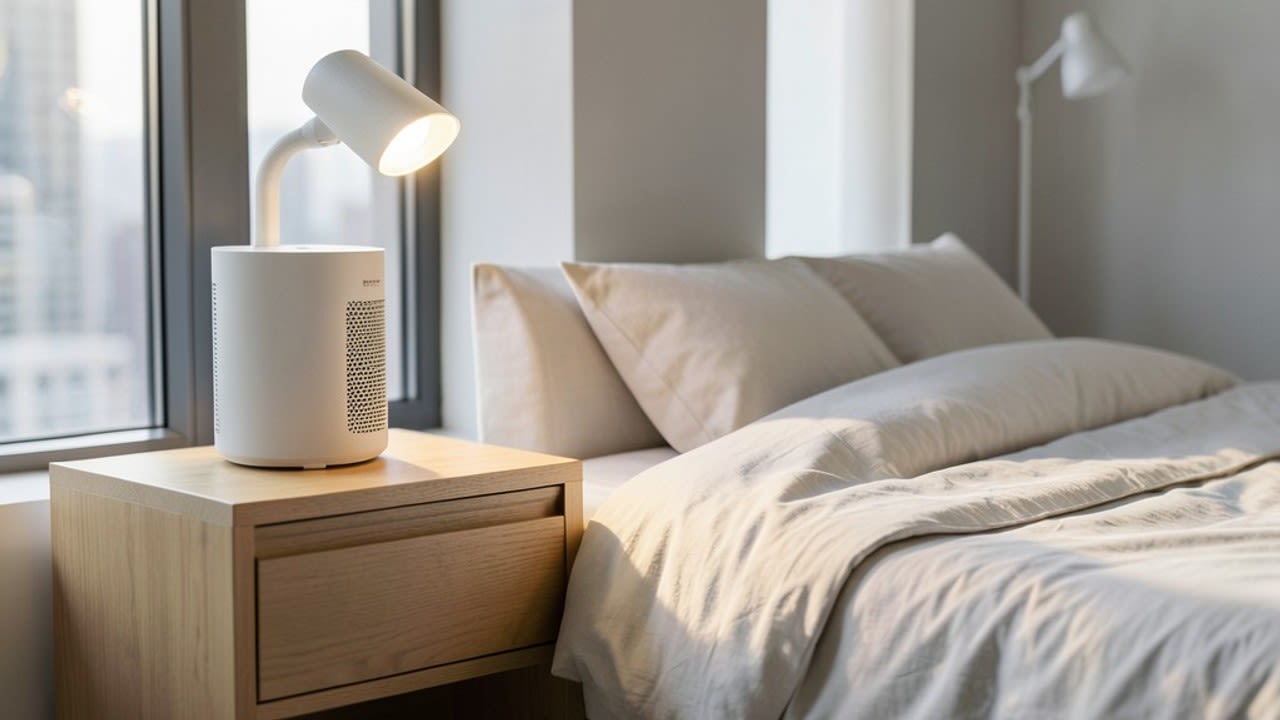
Every October, as paddy-stubble smoke from across the Indo-Gangetic plain meets dropping night temperatures and festive emissions ahead of Diwali (falling on Sunday, 8 November 2026), North Indian households face the same retail confusion. Electronics chains push ₹35,000 "smart" air purifiers loaded with ionisers and Wi-Fi apps, pharmacies run low on properly fitted respirators, and social media fills with debates over whether indoor purifiers even work once someone opens a balcony door. Most families end up either buying a single undersized machine for the drawing room—leaving bedrooms unfiltered all night—or doing nothing at all because the upfront hardware bill looks too steep.
Treating winter air protection as an emotional gadget purchase hides the actual household math. When you break down clean air into rupees per protected person-hour across the 90-day peak smog window (mid-October through mid-January), the numbers look very different from showroom price tags. By combining pollution thresholds from the World Health Organization (WHO) Global Air Quality Guidelines and the Central Pollution Control Board (CPCB) National Air Quality Index with appliance testing standards under the Bureau of Indian Standards (BIS IS 17531:2021 for air purifiers and IS 9473:2002 for particulate respirators), you can calculate exactly what each defence costs a family of four—and what neither a machine nor a mask can fix.
1. The Baseline Gap: Why "Satisfactory" on an App Still Exceeds the WHO Limit by 4x
Before spending a rupee on hardware, you need to know what the numbers on your phone screen or purifier display actually measure. Air quality apps in India either display the CPCB National Air Quality Index (AQI) (a unitless composite score from 0 to 500) or raw PM2.5 concentration (fine particulate matter aged 2.5 microns or smaller in diameter, measured in micrograms per cubic metre, or μg/m³).
Because particles smaller than 2.5 microns bypass upper-airway filtration, cross the alveolar lung barrier, and enter the bloodstream directly, the WHO tightened its global exposure thresholds in September 2021. India's statutory National Ambient Air Quality Standards (NAAQS), set by the CPCB in 2009, remain four to eight times higher:
| Standard / AQI Category | 24-Hour Mean PM2.5 (μg/m³) | Annual Mean PM2.5 (μg/m³) | Multiple of WHO 24-Hr Guideline (15 μg/m³) | What the Category Means in Practice |
|---|---|---|---|---|
| WHO Global Guideline (2021) | 15 μg/m³ | 5 μg/m³ | 1.0x (Reference) | Threshold above which excess cardiorespiratory mortality rises |
| India CPCB NAAQS Limit | 60 μg/m³ | 40 μg/m³ | 4.0x | Upper boundary of CPCB "Satisfactory" air (AQI 100) |
| CPCB "Good" (AQI 0–50) | 0–30 μg/m³ | — | Up to 2.0x | Green light on most Indian purifiers and apps |
| CPCB "Moderate" (AQI 101–200) | 61–90 μg/m³ | — | 4.1x to 6.0x | Breathing discomfort for asthma, COPD, and heart patients |
| CPCB "Poor" (AQI 201–300) | 91–120 μg/m³ | — | 6.1x to 8.0x | Discomfort to most people on prolonged outdoor exposure |
| CPCB "Very Poor" (AQI 301–400) | 121–250 μg/m³ | — | 8.1x to 16.7x | Typical Delhi-NCR baseline across November and December |
| CPCB "Severe" (AQI 401–500) | >250 μg/m³ | — | >16.7x | Affects healthy individuals; serious impact on existing conditions |
2. Six Years of Post-Diwali AQI Data: What the Calendar Tells Us About November 2026
A common household mistake is waiting until the morning after Diwali to order filters or masks, when e-commerce delivery windows stretch to a week and prices spike to maximum retail price (MRP). Historical data from CPCB's daily 4:00 PM bulletins shows that North India's winter air quality reliably enters the "Very Poor" to "Severe" band regardless of whether Diwali falls in mid-October or mid-November:
| Year & Diwali Date | CPCB Diwali-Day 24-Hr AQI (4 PM Bulletin) | CPCB Day-After-Diwali AQI (4 PM Bulletin) | Primary Meteorological & Emission Drivers |
|---|---|---|---|
| 2020 (14 Nov) | 414 (Severe) | 435 (Severe) | Late-November temperature inversion + high farm-fire count + low wind |
| 2021 (4 Nov) | 382 (Very Poor) | 462 (Severe) | Calm surface winds trapped overnight firecracker and stubble emissions |
| 2022 (24 Oct) | 312 (Very Poor) | 303–326 (Very Poor) | Earlier October date + warmer daytime mixing height moderated peak |
| 2023 (12 Nov) | 218 (Poor) | 358 (Very Poor) | Pre-Diwali rain washed out particulates on 11 Nov; spiked on Day +1 |
| 2024 (31 Oct) | 328 (Very Poor) | 339 (Very Poor) | Brisk northwesterly winds prevented "Severe" lock-in despite high load |
| 2025 (20 Oct) | 345 (Very Poor) | >350 (Very Poor / Severe) | Stagnant evening air pushed overnight hourly peaks into Severe range |
[!NOTE] Measurement Discrepancy Note: The CPCB publishes its official daily AQI bulletin at 4:00 PM IST, representing the rolling 24-hour average from 4:00 PM the previous day. Because Diwali firecrackers and late-evening temperature inversions peak between 8:00 PM and 2:00 AM, the true pollution surge falls into the Day-After-Diwali (Day +1) bulletin, not the Diwali-day afternoon bulletin. With Diwali 2026 falling on 8 November, the festival lands squarely inside the colder early-November inversion window.
3. Step-by-Step Mathematical Comparison: Rupee-Per-Clean-Hour for a Family of Four
To compare an indoor air purifier against certified N95/FFP2 masks fairly, we must model how a household actually breathes across a 24-hour day during the 90-day winter smog season (15 October to 15 January):
Household Simulation Baseline
- Household Profile: Family of 4 (2 adults, 2 children or senior parents) sleeping across 2 bedrooms (2 persons per bedroom).
- Smog Season Horizon: 90 days (15 October to 15 January).
- Indoor Bedroom Protection Window: 12 hours/day (10:00 PM to 10:00 AM) = 1,080 machine-hours per bedroom, delivering 4,320 protected indoor person-hours across the family.
- Outdoor / Transit Window: 2.5 hours/person/day (school bus, metro/auto commute, walks) = 225 hours per person, or 900 outdoor person-hours for the family.
- Electricity Tariff: ₹7.00 per kWh (representative urban domestic mid-slab across Delhi-NCR, Punjab, Haryana, and UP).
[!TIP] Cost per Protected Person-Hour Formula:
Cost per Person-Hour (₹) = (Annualised Hardware Cost + Seasonal Filter/Mask Cost + Seasonal Electricity Cost) ÷ Total Protected Person-Hours
Option A: Two Bedroom H13 HEPA Air Purifiers (Indoor Shield — 4,320 Person-Hours)
A single purifier in the living room cannot push clean air into closed bedrooms at night. Protecting four people during sleep requires two basic True HEPA (Grade H13) purifiers (rated at 300–350 m³/hr Clean Air Delivery Rate under BIS IS 17531:2021):
- Upfront Hardware Cost: ₹11,000 per unit × 2 units = ₹22,000.
- Annualised Hardware (5-Year Motor Lifespan): ₹22,000 ÷ 5 years = ₹4,400 / season.
- Seasonal Filter Replacement: North India's winter PM2.5 load (150–300 μg/m³) saturates one composite H13 HEPA + activated carbon filter per 90-day season (1,080 to 1,400 hours). At ₹2,800 per filter × 2 units = ₹5,600 / season.
- 90-Day Electricity Cost (Medium Fan Speed at 38 Watts):
Energy Consumed = 2 units × 0.038 kW × 1,080 hours = 82.08 kWh
Electricity Bill = 82.08 kWh × ₹7.00 / kWh = ₹574.56 (~₹575 / season) - Total 90-Day Seasonal Cost (2 Purifiers): ₹4,400 + ₹5,600 + ₹575 = ₹10,575 / season (or ₹117.50 per day for the entire family).
Rupee-Per-Clean-Hour (Option A):
₹10,575 ÷ 4,320 person-hours = ₹2.45 per protected person-hour(or ₹9.79 / hour for all 4 members combined).
Option B: Certified N95 / FFP2 Respirators (Outdoor & Transit Shield — 900 Person-Hours)
Cloth masks and loose surgical masks leak unfiltered air around the cheeks and nose bridge. Effective outdoor protection requires a head-strap particulate respirator certified under BIS IS 9473:2002 (FFP2 class, ≥94% filtration) or NIOSH N95 (≥95% filtration):
- Safe Reuse Horizon: A user rotating 3 to 4 masks in breathable paper bags can wear each mask for roughly 15 cumulative outdoor hours before strap tension loosens or breathing resistance rises.
- Masks Needed for 90 Days: (225 outdoor hours ÷ 15 hours/mask) = 15 masks per person × 4 members = 60 masks per season.
- Total 90-Day Seasonal Cost: 60 masks in sealed bulk packs @ ₹55/mask = ₹3,300 / season (or ₹36.67 per day for the family).
Rupee-Per-Clean-Hour (Option B):
₹3,300 ÷ 900 outdoor person-hours = ₹3.67 per protected person-hour.

Option C: Combined "Indoor + Transit" Shield vs "Doing Nothing"
Purifiers and masks are not substitutes; they cover completely different hours of the day. Combining both gives a family of four 14.5 hours/day of filtered breathing (5,220 person-hours across the winter):
Advertisement
| Smog Defence Strategy (Family of 4, 90-Day Season) | Upfront Cash Outlay (Year 1) | True 90-Day Seasonal Cost (Amortised) | Protected Person-Hours (90 Days) | Cost Per Person-Hour (₹) | Daily Cost Per Family Member (₹) |
|---|---|---|---|---|---|
| Option A: 2 Bedroom H13 Purifiers (12 hrs/day) | ₹22,575 (incl. hardware + power) | ₹10,575 (₹4.4k cap + ₹5.6k filters + ₹575 power) | 4,320 hours (indoor sleep/rest) | ₹2.45 / hr (₹1.87 at 16 hrs/day) | ₹29.38 / day |
| Option B: 60 Certified FFP2/N95 Masks (2.5 hrs/day) | ₹3,300 (bulk packs @ ₹55/mask) | ₹3,300 (replaced every 15 wear-hours) | 900 hours (commute/outdoor) | ₹3.67 / hr (₹5.50 at 10-hr life) | ₹9.17 / day |
| Option C: Combined Indoor + Outdoor Shield | ₹25,875 (Year 1); ₹9,475/yr in Years 2–5 | ₹13,875 / season | 5,220 hours (60% of winter hours) | ₹2.66 / hr (Blended) | ₹38.54 / day |
| Option D: "Doing Nothing" (1 Acute Clinic Episode for 2 Members) | ₹0 preventive outlay | ₹5,000–₹9,000+ per acute flare-up | 0 hours | Infinite (Zero Prevention) | Reactive medical + lost workdays |
[!IMPORTANT] The Cost of "Doing Nothing": A single acute winter bronchitis, wheezing, or sinus flare-up across two family members in an urban outpatient clinic (two specialist consultations at ₹1,000 each, nebulisation/inhalers and a 7-day prescription course at ₹2,500–₹3,500, plus basic diagnostics) routinely consumes ₹5,000 to ₹9,000 out of pocket—roughly 55% to 95% of an entire winter's recurring filter-and-mask budget—while leaving the household breathing 250+ μg/m³ air the very next night.
4. The CADR Room-Sizing Formula: How to Avoid Buying an Underpowered Machine
When shopping for an air purifier, ignore marketing labels like "covers up to 600 sq. ft." Those claims assume a sealed laboratory chamber with an 8-foot ceiling and the fan screaming at maximum decibels. Instead, size your purifier using its Clean Air Delivery Rate (CADR) in cubic metres per hour (m³/hr), certified under BIS IS 17531:2021:
CADR Room-Sizing Formula:
Required CADR (m³/hr) = Room Volume (m³) × Target Air Changes Per Hour (ACH)
How to Calculate for a 150 sq. ft. Bedroom (10-Foot Ceiling)
- Calculate Room Volume in Cubic Metres:
150 sq. ft. × 10 ft. = 1,500 cubic feet. Divide by 35.315 to convert to cubic metres = 42.47 m³. - Apply 5 Air Changes Per Hour (ACH): Cleaning the room volume 5 times every hour requires an effective airflow of
42.47 m³ × 5 = 212.4 m³/hr. - Apply the "Sleep-Speed Derating" Factor: Every purifier's advertised CADR is measured at its loudest Turbo setting (52–62 dB), which is too loud for sleep. At Medium or Sleep mode, airflow drops to 50% to 60% of rated CADR. To get 212 m³/hr of actual quiet night-time filtration, you must buy a unit with a rated maximum CADR of 330 to 400 m³/hr.
| Bedroom Floor Area (10-Ft Ceiling) | Room Volume (m³) | Minimum Airflow for 5 ACH (m³/hr) | Recommended Rated Max CADR (Allowing for Quiet Night Speed) |
|---|---|---|---|
| 100 sq. ft. (Small Bedroom / Study) | 28.3 m³ | 142 m³/hr | 240–280 m³/hr |
| 150 sq. ft. (Standard Bedroom) | 42.5 m³ | 213 m³/hr | 330–400 m³/hr |
| 220 sq. ft. (Large Master Bedroom) | 62.3 m³ | 312 m³/hr | 500–600 m³/hr (or two 280 m³/hr units) |
5. Five-Step Execution Checklist for Smog Season
Follow these five rules to maximize your protection and avoid showroom gimmicks:
- Buy Mechanical H13 HEPA + Carbon Only (Skip Ionisers and UV-C): A mechanical fan pulling air through a pleated True HEPA H13 filter (trapping ≥99.95% of particles at 0.3 microns) and an activated carbon mesh is all you need. Avoid "negative ion" or unshielded plasma add-ons; poorly designed ionisers generate indoor ozone (O₃), a respiratory irritant that triggers asthma.
- Check Replacement Filter Price Before Buying the Unit: Some budget purifiers sell the unit for ₹6,500 but price replacement filters at ₹3,500—or discontinue the filter shape after two seasons. Always verify that third-party or OEM H13 filters are in stock for ₹2,000–₹3,000.
- Seal Gaps at Night, Ventilate by Afternoon: An air purifier cannot win against an open bathroom exhaust vent or sliding balcony gap. Seal gaps with ₹200 foam weather-stripping tape. Open windows briefly for 15–20 minutes between 2:00 PM and 4:00 PM (when daytime sun lifts the mixing height and outdoor PM2.5 hits its daily low) to flush out indoor carbon dioxide (CO₂).
- Insist on Headbands, Not Ear-Loops, for Masks: Even genuine FFP2 fabric leaks 20% to 30% of smoky air around the edges if held loosely by ear-loops. Choose BIS IS 9473:2002 FFP2 or NIOSH N95 masks with dual elastic head-straps and an adjustable aluminium nose clip.
- Know High-Risk Red Flags: Children under 5, adults over 60, pregnant women, and anyone with asthma, COPD, or cardiovascular disease face severe physiological stress when PM2.5 crosses 120 μg/m³ (AQI >300). Consult a pulmonologist immediately if any family member experiences persistent resting breathlessness, wheezing, chest tightness, blood oxygen (SpO₂) dropping below 94%, or a cough lasting over 7 to 10 days.
6. What This Does NOT Mean (And What We Don't Know Yet)
What This Does NOT Mean
- An air purifier does NOT produce oxygen or remove CO₂: In a tightly sealed bedroom with two adults sleeping for 9 hours, CO₂ levels can climb above 1,500–2,000 ppm, causing morning grogginess unless you ventilate during the afternoon low-pollution window or leave a 1-centimetre door undercut for air exchange.
- Indoor plants do NOT replace mechanical filtration: While houseplants have psychological benefits, NASA chamber studies translated to real apartment volumes show you would need hundreds of plants per square metre to match a single 300 m³/hr mechanical fan.
- Exhalation-valve masks do NOT protect others: While a valved N95/FFP2 mask protects the wearer and reduces humidity inside the mask, choose an unvalved respirator if you have a viral cough so you do not expel unfiltered droplets into public spaces.
What We Don't Know Yet
- Exact Peak AQI Trajectory for 6–15 November 2026: While historical records show post-Diwali 24-hour averages consistently landing between 303 and 462, the severity of the 8 November 2026 peak depends on whether a Western Disturbance brings rain or wind speed above 10 km/h across Delhi-NCR and Punjab.
- Long-Term Enforcement of Mandatory BIS Labelling: While BIS standard IS 17531:2021 defines uniform CADR testing protocols in India, several imported online purifiers still advertise non-standard CADR numbers tested in smaller overseas chambers. Check rated airflow in m³/hr alongside filter surface area.
7. Frequently Asked Questions
1. Does running two air purifiers all winter cause a massive jump in my electricity bill?
No. A standard brushless DC (BLDC) motor in a modern H13 HEPA purifier consumes just 25 to 45 Watts on medium speed—less than a standard 75-Watt ceiling fan. Running two units for 12 hours a day across 90 days consumes roughly 82 kWh, adding only about ₹575 for the entire three-month winter at ₹7/unit. Filter replacement (₹5,600 for two units), not electricity, is the real recurring operating cost.
2. Can I vacuum or wash my HEPA filter at the end of December to make it last two winters?
No. You should gently vacuum or rinse only the outer mesh pre-filter (which catches pet hair and coarse lint) every two weeks. Never wash or aggressively vacuum the white pleated H13 HEPA drum; water ruins the microscopic glass/synthetic fibre weave, creating invisible pinholes that let PM2.5 pass straight through while making the filter look clean.
3. Why does my purifier's built-in AQI display jump to "015 (Green)" in 10 minutes while the corner of the room still feels dusty?
Built-in infrared laser sensors sit directly on the chassis of the purifier, just centimetres away from the clean-air outlet. They measure the bubble of clean air immediately surrounding the machine first. Placing a standalone PM2.5 monitor on your bedside table 3 metres away—or simply running the purifier continuously on a fixed medium fan speed rather than "Auto Mode"—prevents the fan from throttling down prematurely.
4. Are cloth masks with a "PM2.5 carbon insert pocket" as effective as an N95 or FFP2 mask?
No. Even if the small rectangular insert uses filter media, inhaled air takes the path of least resistance—flowing through the woven cotton gaps around the insert and the unsealed edges along your cheeks and nose. Only a full-face-seal respirator certified under BIS IS 9473:2002 (FFP2) or NIOSH N95 forces inhaled air through the electrostatic filter layer.
5. Is one large ₹35,000 purifier better than two ₹11,000 purifiers for a two-bedroom flat?
No. Air purifiers rely on local room circulation and cannot pull particulate matter through corridors and doorway thresholds efficiently. Two ₹11,000 H13 purifiers (330–350 m³/hr CADR each) placed inside the two bedrooms where family members actually sleep deliver far lower overnight PM2.5 exposure than a single expensive unit sitting in the hallway.
References & Further Reading
- World Health Organization: Ambient Air Quality and Health Guidelines
- Central Pollution Control Board: National Ambient Air Quality Standards & Daily AQI
- Bureau of Indian Standards: IS 17531:2021 (Air Purifier Performance) & IS 9473:2002 (Respirators)
- Your Personal Inflation Rate Isn’t 5.54%: Build It From Three Months of Bills
Disclaimer: Educational content only. OneMint is not a medical provider or SEBI-registered investment adviser. Nothing in this article constitutes medical, diagnostic, or clinical advice. Air purifiers and particulate respirators reduce ambient particulate exposure but do not treat or cure respiratory or cardiovascular conditions; always consult a qualified medical professional for health symptoms.
Advertisement