

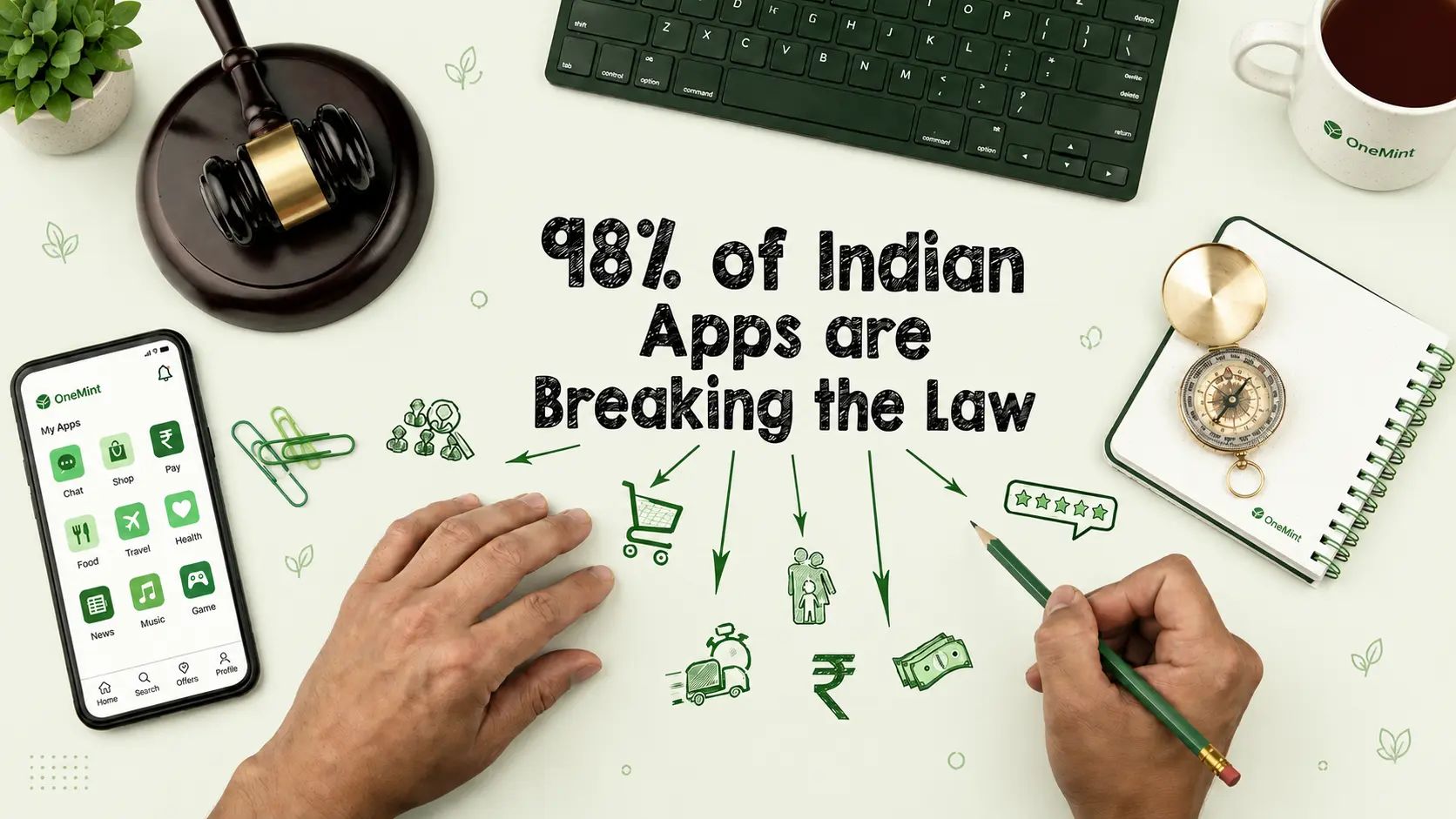
Consumer watchdog audits in the first half of 2026 revealed that 98% of major commercial apps operating in India are actively violating consumer protection laws. The weapon of choice: deceptive UX configurations legally classified as 'Dark Patterns' — from false urgency timers that reset on page refresh to subscription traps buried behind multi-layered cancellation menus. The Central Consumer Protection Authority has responded with the most aggressive regulatory crackdown in Indian digital commerce history.
Predatory Architectures and Deceptive Interface Efficiency
With digital transactions skyrocketing across Tier-1 and Tier-2 Indian cities, budgeting and consumer choice have theoretically become easier and more accessible. However, tech platforms are evolving beyond simple market service providers into aggressive systems that analyze user psychology, exploit cognitive vulnerabilities, automate unapproved transactions, and obscure pricing breakdowns with minimal manual visibility for the buyer. The core mechanism utilized by these non-compliant apps revolves around structural deception. They intentionally structure user pathways to manipulate the consumer into choices they never originally intended to make. Instead of engaging in honest, transparent commerce, these apps use algorithmic dark patterns to bypass cognitive friction, relying on user fatigue and confusing layouts to inflate transaction sizes, trap recurring subscriptions, and prevent refunds. In reality, the user is no longer buying a service; they are being guided through an interface trap designed to extract maximum monetary yield before the individual realizes what has transpired.
"Deceptive design patterns manipulate user choices, undermining informed consent and turning transparent digital storefronts into digital extraction zones."
The Structural Forms of Abuse: Spotting the Violations
The central regulatory authority governing digital commerce has categorized these non-compliant mechanisms into specific structural forms. If you notice any of these active behaviors when you open a food delivery, ride-hailing, e-commerce, or fintech app, you are interacting with a direct legal violation:
-
False Urgency: Creating artificial scarcity or immediate time pressure to force quick, uncalculated purchasing decisions. This includes countdown timers on checkouts that completely reset when the page is refreshed, or false system notifications stating "Only 2 rooms left at this price!" to disrupt calm financial evaluation.
-
Basket Sneaking: Automatically adding extra items, service charges, platform fees, or charitable donations into your shopping cart without clear, active user consent. Consumers find themselves forced to manually uncheck hidden boxes to prevent paying for unwanted add-ons.
-
Confirm Shaming: Utilizing intentional emotional guilt and psychological pressure to prevent users from opting out of premium options or digital subscriptions. Common examples include using choices like "No, I don't care about saving money" or "No, I prefer paying full price" as the only button text to decline an add-on.
-
Subscription Traps & Hidden Drip Pricing: Concealing the true cost of an item or service until the final step of payment, or hiding the recurring nature of an auto-renewal plan under vague, tiny fonts, transforming a one-time purchase into a permanent monthly liability.
The 2026 Regulatory Clampdown: What Changed?
The rampant scaling of digital deception led to major institutional shifts by early 2026. The Central Consumer Protection Authority (CCPA), utilizing statutory powers under Section 18 of the Consumer Protection Act, 2019, completely removed the leeway previously enjoyed by tech firms. The legal landscape has fundamentally hardened through aggressive enforcement actions and systemic crackdowns designed to clear out digital misconduct.
"Statutory Mandate: CCPA 2026 Directives — Under the updated framework, any deployment of specified dark patterns is legally equated to an 'Unfair Trade Practice' and 'Misleading Advertisement'. Platforms systematically offering services in India can no longer rely on 'pre-ticked boxes' or hide subscription cancellation buttons behind multi-layered, confusing menu loops."
Advertisement
Crucially, the 2026 enforcement regime introduced a mandatory self-audit system. Tech corporations were given strict timelines to scrub non-compliant UI elements from their code bases or face direct prosecution, heavy financial penalties, and operational suspensions. Furthermore, the Advertising Standards Council of India (ASCI) reported in their 2026 audits that digital media accounted for over 97% of violative advertising campaigns they reviewed — primarily digital ads and influencer marketing content flagged for misleading claims.
The Practical Action Toolkit: What You Can Do

Now, it may sound like tech giants hold all the structural leverage, but no—understanding the system allows you to flip the script. When you write down your expenses and actively analyze your transaction paths, your mind becomes aware of what the interface is doing, transforming passive spending into active financial discipline. To protect your capital from illegal digital patterns, deploy this exact diagnostic toolkit before you tap any payment screen:
-
Execute a Line-by-Line Breakdown: Never assume the price displayed on the product screen is the price at checkout. Pause at the final payment gateway and review the itemized cost breakdown row by row to detect snuck items, platform charges, or pre-selected recurring options.
-
Deploy Incognito Diagnostics: When using high-frequency travel, hospitality, or booking platforms, conduct search queries via private browsing sessions. This prevents internal algorithms from using your session data to manufacture false scarcity and pump up localized pricing metrics.
-
The 30-Minute Documentation Kit: If an app traps a subscription or sneaks items into your cart, instantly document the violation. Take consecutive screenshots from product choice to payment. If the pattern relies on motion (like a falsified countdown timer), use your device's screen recorder to capture the interactive flow. Note your exact OS version and app version details.
-
Leverage Statutory Complaint Network: Do not accept useless platform loyalty credits or automated chatbot rejections in lieu of legal monetary refunds. File a direct complaint via the National Consumer Helpline (NCH) by dialling 1915, or lodge a formal digital dispute through the e-Daakhil filing infrastructure (https://edaakhil.nic.in) to enforce your statutory right to a clean, unmanipulated digital marketplace.
Read Further
[1] Press Information Bureau, Government of India. CCPA Issues Guidelines for Prevention and Regulation of Dark Patterns, 2023 — Click here
[2] Press Information Bureau, Government of India. CCPA Advisory: Self-Audit by E-Commerce Platforms for Detecting Dark Patterns — Click here
[3] OneMint. AI Is Quietly Taking Over Your Bank — And Here's The Thing Nobody Told You — Click here
Disclaimer: All data, metrics, compliance statistics, and regulatory definitions provided within this special report were compiled from current public internet resources, statutory advisories, and consumer complaint review frameworks. This text is for educational, awareness, and informational reporting purposes only, and should not be construed as institutional legal counsel or definitive financial advice.
Advertisement