

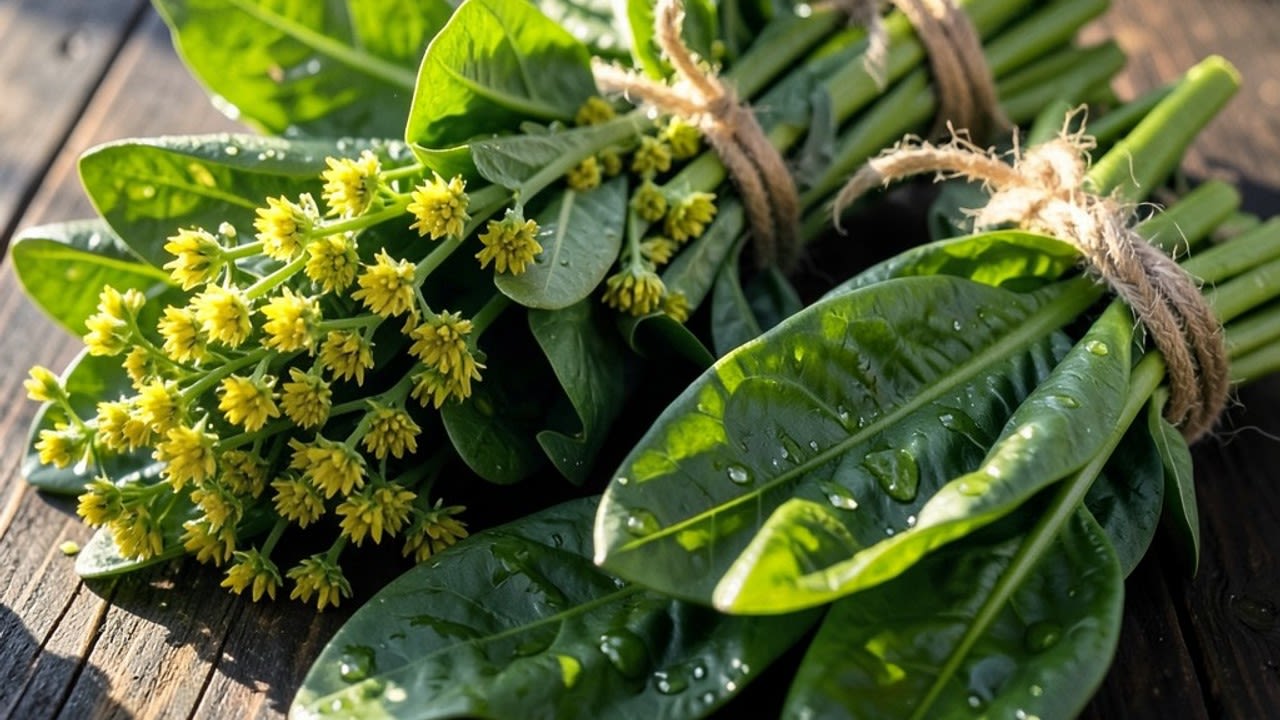
Walk into any urban supermarket or organic farmers' market ahead of the winter season in November 2026, and you will find imported curly kale stacked neatly on refrigerated shelves at ₹40 to ₹70 for a modest 150-gram bunch. Food marketing algorithms have successfully convinced urban households that paying a premium for Western greens unlocks superior health benefits.
As of 25 October 2026, comparing current Indian mandi and retail prices against the definitive nutritional values published in the Indian Council of Medical Research - National Institute of Nutrition (ICMR-NIN) Indian Food Composition Tables (IFCT) tells a completely different story. Traditional Indian winter greens—headed by sarson ka saag (mustard greens), methi (fenugreek leaves), and palak (spinach)—not only outperform imported greens in key micronutrients but cost a fraction of the price, making them the ultimate cost-per-nutrient champions for Indian households.
1. The Cost-Per-Nutrient Matrix: Indigenous Greens vs. Imported Kale
When evaluating the nutritional return on investment for grocery budgets, comparing raw weight alone is misleading. A vegetable's true value lies in its concentration of bioavailable iron, calcium, beta-carotene, and dietary fiber relative to its retail cost per 100 grams.
Using baseline retail prices from October 2026 across major northern and western Indian markets (where sarson sells at roughly ₹15 to ₹20 per 500g bundle, methi at ₹20 per bundle, and palak at ₹15 per bundle, contrasted against imported or hydroponic kale at ₹40 per 150g), the ICMR-NIN IFCT dataset establishes a stark cost-per-nutrient advantage for local greens:
| Winter Green Variety (100g Edible Portion) | Average Retail Price (Oct 2026) | Iron Content (mg) [ICMR-NIN] | Calcium Content (mg) [ICMR-NIN] | Vitamin C (mg) [ICMR-NIN] | Cost per Milligram of Iron (₹) [OneMint Calculation] |
|---|---|---|---|---|---|
| Sarson (Mustard Greens, Raw) | ₹3.50 / 100g (₹17.50 / 500g bundle) | 1.62 mg | 115 mg | 68 mg | ₹0.022 per mg of iron (Extremely high efficiency) |
| Methi (Fenugreek Leaves, Raw) | ₹4.00 / 100g (₹20.00 / 500g bundle) | 1.90 mg | 395 mg | 52 mg | ₹0.021 per mg of iron (Superior calcium & iron value) |
| Palak (Spinach, Raw) | ₹3.00 / 100g (₹15.00 / 500g bundle) | 1.14 mg | 73 mg | 28 mg | ₹0.026 per mg of iron (High volume, low cost) |
| Imported Curly Kale (Raw) | ₹26.60 / 100g (₹40.00 / 150g bunch) | 1.47 mg | 150 mg | 120 mg | ₹1.810 per mg of iron (~82 times more expensive per mg of iron) |
As the matrix demonstrates, while kale boasts a slightly higher absolute Vitamin C content, you are paying an exponential financial premium for it. To acquire 10 milligrams of dietary iron from imported kale, a household spends roughly ₹18.10, whereas acquiring the same 10 milligrams of iron from fresh local sarson or methi costs approximately ₹0.21 to ₹0.22 (OneMint calculation)—delivering roughly 80 times greater cost-efficiency.
2. Worked Rupee Math: Feeding a Family of Four Winter Greens for a Week
To see what this nutritional efficiency means for a household weekly grocery budget, let us calculate the exact cost and micronutrient delivery of incorporating traditional winter greens into family meals across seven days.
Baseline Parameters & Assumptions
- Household Size: 4 members (2 adults, 2 children)
- Weekly Greens Consumption Target: 1.5 kilograms (1,500 grams) of mixed seasonal greens (sarson, methi, and palak) vs. an equivalent cooked weight in imported kale.
- Retail Blend for Indigenous Greens: 600g sarson (₹21), 500g methi (₹20), and 400g palak (₹12) = Total weekly weight 1,500g for ₹53.00.
- Equivalent Kale Basket: 1,500g of retail kale at ₹26.60/100g = ₹399.00.
Plain-Text Nutritional Cost Formulas
Total Basket Cost:
Total Basket Cost = Sum of [(Weight of Variety in grams ÷ 100) × Price per 100g]Total Iron Delivered:
Total Iron Delivered (mg) = Sum of [(Weight of Variety in grams ÷ 100) × ICMR Iron per 100g]Cost Efficiency Ratio:
Cost Efficiency Ratio = Cost of Kale Basket ÷ Cost of Indigenous Greens Basket
Line-by-Line Arithmetic Comparison
1. Indigenous Greens Weekly Basket (Sarson, Methi, Palak)
- Sarson (600g): (600 ÷ 100) × ₹3.50 = ₹21.00 (Delivers 6 × 1.62 = 9.72 mg iron) (OneMint calculation).
- Methi (500g): (500 ÷ 100) × ₹4.00 = ₹20.00 (Delivers 5 × 1.90 = 9.50 mg iron) (OneMint calculation).
- Palak (400g): (400 ÷ 100) × ₹3.00 = ₹12.00 (Delivers 4 × 1.14 = 4.56 mg iron) (OneMint calculation).
- Total Indigenous Basket: Weight = 1,500g; Cost = ₹53.00; Iron Delivered = 23.78 mg (OneMint calculation).
2. Imported Kale Weekly Basket
- Kale (1,500g): (1,500 ÷ 100) × ₹26.60 = ₹399.00 (Delivers 15 × 1.47 = 22.05 mg iron) (OneMint calculation).
3. Comparative Variance
- Weekly Cash Savings by Choosing Local Greens: ₹399.00 − ₹53.00 = ₹346.00 saved per week (or ₹1,384 per month) (OneMint calculation).
- Micronutrient Yield: The local indigenous basket delivers more total iron (23.78 mg vs. 22.05 mg) at 13% of the cost (OneMint calculation).
Variance Callout: Spending ₹53 a week on a mixed bundle of local winter greens (sarson, methi, and palak) provides 23.78 milligrams of dietary iron for a family of four—surpassing the iron yield of a ₹399 weekly kale basket while saving ₹346 every single week (OneMint calculation).
Advertisement
Note: Constants used are ICMR-NIN IFCT raw nutritional values per 100g edible portion and October 2026 urban retail mandi price averages across India.
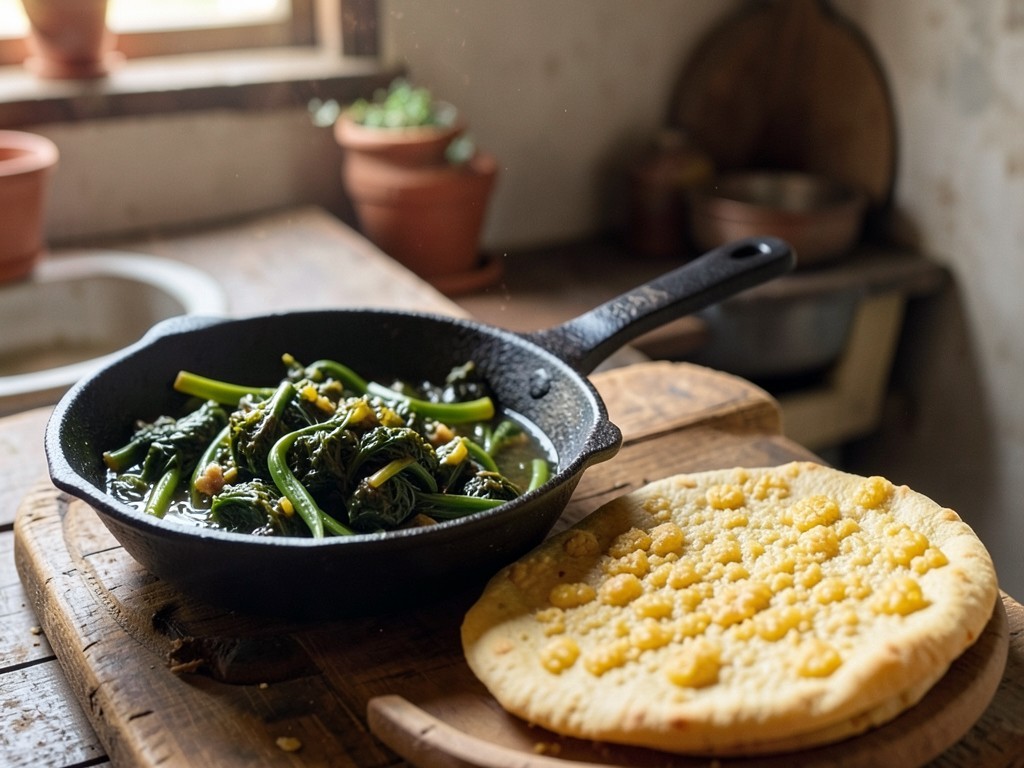 Figure: Traditional winter cooking of mustard and spinach greens (sarson ka saag) paired with cornmeal flatbreads (makki di roti). Culinary techniques combining mild heat, acid, and healthy fats break down oxalates and unlock optimal mineral absorption.
3. Epistemic Honesty: Oxalates, Bioavailability, and What We Don't Know Yet
While raw nutrient tables favor indigenous greens, traditional cooking science matters just as much as raw composition:
- The Oxalate and Phytate Factor: Spinach (palak) and certain brassica greens contain oxalic acid and phytates, which bind to iron and calcium, reducing their immediate intestinal absorption (bioavailability). However, traditional Indian culinary methods—such as combining sarson and palak with acidic agents (like dry mango powder / amchur, tomato, or lemon juice) or pairing them with vitamin-C-rich Makki di Roti accompaniments—significantly enhance iron absorption. Furthermore, fenugreek (methi) possesses a lower relative oxalate interference and exceptionally high calcium content (395 mg per 100g).
- Seasonal Freshness vs. Cold-Chain Lag: Imported or hydroponic greens often spend days in transit and cold storage, losing delicate water-soluble vitamins. Local winter greens harvested within a 50km radius reach neighbourhood vegetable vendors within 12 to 24 hours of harvest, preserving maximum cellular integrity.
What We Don't Know Yet
- Precise Micronutrient Variations Across Soil Types: While ICMR-NIN tables provide robust baseline averages, the exact mineral density of local greens can vary depending on whether they were grown in organic farm soil, peri-urban sewage-irrigated plots, or controlled greenhouse settings.
- Urban Retail Price Volatility: Local vegetable prices can fluctuate sharply during unseasonal winter rains or cold waves, though indigenous greens consistently remain multiples cheaper than imported exotic varieties.
4. What This Does NOT Mean
- It does NOT mean kale is unhealthy: Kale is a nutrient-dense brassica packed with antioxidants and vitamins; the critique is strictly economic—that paying an 800% markup for imported kale over local sarson or methi yields zero unique nutritional advantage.
- It does NOT mean raw greens solve systemic deficiencies alone: Correcting iron or calcium deficiencies requires overall dietary balance, adequate protein intake, and proper gut health, not just consuming leafy vegetables.
- It does NOT mean preparation style is irrelevant: Drowning winter greens in excessive cooking oils, clarified butter (ghee), or cream shifts the caloric and lipid profile of the dish—though traditional moderate tempering remains a cornerstone of nutrient assimilation.
5. Actionable Reader Execution Block: Your 3-Step Winter Greens Protocol
Maximize your winter nutrition without inflating your grocery bill by following this three-step routine:
- Build a Tri-Green Rotation at the Mandi: Instead of buying a single green, purchase equal weights of sarson (for robust glucosinolates and Vitamin C), methi (for dense calcium and iron), and palak (for smooth texture and folate).
- Pre-Soak and Wash Thoroughly: Wash leafy greens in lukewarm water with a half-teaspoon of salt or vinegar to remove residual soil and agricultural dust before chopping.
- Pair With Vitamin C and Healthy Fats: Cook your greens with a squeeze of lemon or amchur and moderate healthy fats to maximize the absorption of fat-soluble vitamins (A, E, K) and iron. Cross-check your overall dietary micronutrient balance using OneMint's Financial Health Quiz and BMI Calculator on the Tools page.
6. Frequently Asked Questions (FAQ)
1. Are Indian mustard greens (sarson) as nutritious as imported kale?
Yes. According to ICMR-NIN food composition data, sarson offers comparable or superior iron, calcium, and beta-carotene density per 100 grams compared to kale, while costing a tiny fraction of the price.
2. Why is kale so much more expensive than local greens in Indian markets?
Kale is largely an imported or niche hydroponic crop in India, requiring specialized temperature-controlled supply chains, boutique packaging, and low-volume distribution, which inflates retail pricing.
3. Does cooking destroy the nutrients in winter greens?
Cooking reduces heat-sensitive Vitamin C partially, but it simultaneously breaks down stubborn cell walls and oxalates, making minerals like iron and calcium significantly easier for the human body to absorb.
4. Can people with kidney stones eat winter greens like spinach and sarson?
Individuals with a history of calcium-oxalate kidney stones should moderate their intake of high-oxalate greens like spinach or consult a clinical dietitian regarding proper preparation and hydration.
5. How should winter greens be stored to preserve freshness through the week?
Do not wash greens before storing; wrap unwashed leaves in dry cotton cloth or paper towels, place them in a breathable bag in the refrigerator crisper drawer, and wash them only immediately before cooking.
6. Where can I check official Indian food composition data and nutritional guidelines?
You can access comprehensive nutritional research and food tables via the National Institute of Nutrition (NIN) Hyderabad portal (nin.res.in) or ICMR guidelines.
Primary Sources & References (Verified as of 25 October 2026)
- ICMR - National Institute of Nutrition (NIN): Indian Food Composition Tables (IFCT) — Nutrient composition data for sarson, methi, palak, and brassica varieties (nin.res.in).
- Ministry of Agriculture & Farmers Welfare, Government of India: National Horticultural Board (NHB) Seasonal Mandi Price Bulletins (October 2026) — Retail pricing benchmarks for indigenous seasonal greens.
Educational content only. OneMint is not a SEBI-registered investment adviser. Nothing in this article constitutes financial, lending, tax, or legal advice.
Advertisement