


When wedding season arrives across India, the temptation to sign a pre-approved digital personal loan banner on a banking app can be overwhelming. Whether you are funding banquet advances, catering, or venue bookings, borrowing ₹10 lakh feels straightforward when digital apps promise instant disbursal. As of 25 October 2026, following the Reserve Bank of India's (RBI) 7 October repo rate hike to 5.50% and the implementation of strict transparency norms under the Key Fact Statement (KFS) framework, looking at just the headline interest rate is a costly mistake.
Lenders are now legally required to disclose the true Annual Percentage Rate (APR)—capturing processing fees, mandatory insurance, documentation charges, and the reducing-balance interest schedule. Comparing an unsecured personal loan against a secured gold loan reveals exactly how much wedding financing costs in rupees today.
1. The Cost Reality: Headline Interest Rate vs. True APR
When a bank quotes a personal loan rate of 11.00% or 12.00% p.a., that figure assumes zero upfront friction. In reality, retail lending charges for unsecured personal loans have hardened following the RBI's calibration of monetary policy. To evaluate what a ₹10 lakh wedding loan actually costs over a 3-year (36-month) or 5-year (60-month) tenure, you must look past the sticker rate to the APR.
| Loan Product & Lender Tier (2026 Cycle) | Headline Interest Rate (Reducing) | Upfront Processing Fee & GST (18%) | Mandatory Insurance / Administrative Add-ons | True Effective APR (Annual Percentage Rate) | Monthly EMI on ₹10 Lakh (3-Year Tenure) |
|---|---|---|---|---|---|
| Top-Tier Bank Personal Loan (Excellent CIBIL ≥ 780, Salary > ₹1.5L/mo) | 10.50% – 11.50% | 1.0% + GST (₹11,800 upfront deduction) | Optional / Group Credit Protect Insurance (₹5,000–₹15,000) | 11.85% – 12.95% p.a. (OneMint calculation) | ₹32,505 to ₹32,974 |
| Mid-Tier Bank / Prime NBFC Personal Loan (Moderate CIBIL 720–770) | 12.50% – 14.50% | 1.5% to 2.0% + GST (₹17,700 to ₹23,600 upfront) | Mandatory loan protection plan / documentation fee | 14.20% – 16.45% p.a. (OneMint calculation) | ₹33,468 to ₹34,458 |
| High-Risk Digital / Consumer NBFC Personal Loan (Quick Disbursal / Lower CIBIL) | 16.00% – 22.00% | 2.5% to 3.0% + GST (₹29,500 to ₹35,400 upfront) | Mandatory processing add-ons / tech fees | 18.50% – 24.80% p.a. (OneMint calculation) | ₹35,157 to ₹38,157 |
| Secured Bank Gold Loan (Pledging 24K/22K Gold Bullion/Jewellery) | 8.75% – 10.50% | 0.5% to 1.0% + GST (₹5,900 to ₹11,800 upfront) | Zero to minimal valuation/locker fee | 9.15% – 11.10% p.a. (OneMint calculation) | ₹31,698 to ₹32,505 |
2. Worked Rupee Math: Unsecured Personal Loan vs. Bank Gold Loan Over 3 Years
To understand the real financial drag of financing a wedding through an unsecured personal loan versus a collateralised gold loan after the October 2026 rate hike, let us run the exact line-by-line arithmetic for a ₹10,00,000 (₹10 lakh) loan taken for 3 years (36 months).
Baseline Parameters & Assumptions
- Loan Principal Required (P): ₹10,00,000 (₹10 lakh)
- Tenure (n): 36 months (3 years)
- Option A (Unsecured Personal Loan): Mid-tier bank/NBFC rate at 13.50% p.a. (reducing balance), with a 1.5% processing fee + 18% GST deducted upfront.
- Option B (Secured Bank Gold Loan): Public-sector bank rate at 9.50% p.a. (reducing balance), with a 0.5% processing fee + 18% GST deducted upfront, backed by eligible 22K gold jewellery pledged under RBI's 75%–85% Loan-to-Value (LTV) limits.
Plain-Text Amortisation Formulas
Upfront Processing Deduction:
Upfront Processing Deduction = Principal (P) × Fee Rate (%) × 1.18Net Disbursed Cash in Bank:
Net Disbursed Cash in Bank = P − Upfront Processing DeductionMonthly EMI Formula (Reducing Balance):
Monthly EMI (M) = P × r × [(1 + r)^n / ((1 + r)^n − 1)]
(where r = Annual Rate ÷ 12, n = 36)Total Repayment Over 36 Months:
Total Repayment Over 36 Months = M × 36Total Cost of Borrowing:
Total Cost of Borrowing = Total Repayment + Upfront Deduction − P
Line-by-Line Arithmetic Comparison
Option A — Unsecured Personal Loan (13.50% p.a., 1.5% fee)
- Upfront Processing Deduction: ₹10,00,000 × 0.015 × 1.18 = ₹17,700 (deducted before disbursal, so you receive ₹9,82,300 in your account) (OneMint calculation).
- Monthly EMI Calculation:
Monthly rate: r = 0.135 ÷ 12 = 0.01125
M = ₹10,00,000 × 0.01125 × [(1.01125)^36 / ((1.01125)^36 − 1)] = ₹33,916 per month(OneMint calculation). - Total Repayment Over 36 Months: ₹33,916 × 36 = ₹12,10,976 (OneMint calculation).
- Total Cost of Borrowing (Interest + Fees): ₹12,10,976 + ₹17,700 − ₹10,00,000 = ₹2,28,676 (OneMint calculation).
Option B — Secured Bank Gold Loan (9.50% p.a., 0.5% fee)
- Upfront Processing Deduction: ₹10,00,000 × 0.005 × 1.18 = ₹5,900 (you receive ₹9,94,100 in your account) (OneMint calculation).
- Monthly EMI Calculation:
Monthly rate: r = 0.095 ÷ 12 = 0.0079167
M = ₹10,00,000 × 0.0079167 × [(1.0079167)^36 / ((1.0079167)^36 − 1)] = ₹32,047 per month(OneMint calculation). - Total Repayment Over 36 Months: ₹32,047 × 36 = ₹11,53,692 (OneMint calculation).
- Total Cost of Borrowing (Interest + Fees): ₹11,53,692 + ₹5,900 − ₹10,00,000 = ₹1,59,592 (OneMint calculation).
Variance Callout: Choosing a secured bank gold loan at 9.50% over a mid-tier personal loan at 13.50% for a ₹10 lakh wedding requirement saves the household ₹69,084 in cash outlays over three years (₹2,28,676 minus ₹1,59,592 total cost) and reduces the monthly EMI burden by ₹1,869 every month (OneMint calculation).
Advertisement
Note: Constants used are 36-month reducing balance amortisation, 18% GST on processing fees, and standard public-sector bank fee structures. Borrowers must ensure their pledged gold purity (22K) and weight support a ₹10 lakh sanction under RBI's permissible LTV caps.
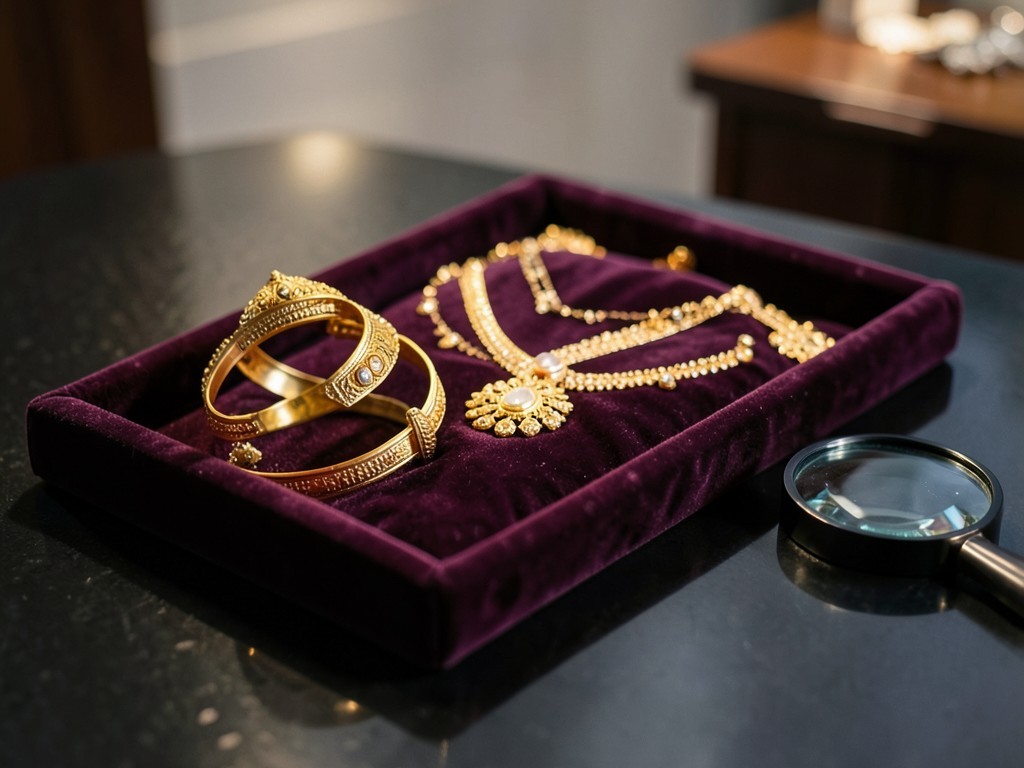 Figure: A velvet inspection tray with traditional Indian gold jewelry and a gemological loupe. Pledging idle family gold at ~9.5% public-sector bank rates under RBI's LTV framework cuts borrowing costs by ₹69,084 compared to an unsecured personal loan.
3. Epistemic Honesty: The Hidden Traps in Wedding Loans and What We Don't Know Yet
When signing loan agreements during peak wedding season, two contractual mechanisms catch borrowers off guard:
1. The Key Fact Statement (KFS) Reality Check
Under RBI's mandatory KFS norms, every lender must provide a standardised summary sheet before loan sign-off detailing the exact APR, all mandatory insurance add-ons, and the total cost of credit. If an agent tries to bundle credit life insurance or loan protection plans without your explicit consent, check the KFS document—you have the right to reject optional insurance wrappers that inflate your effective APR by 1% to 2%.
2. The Gold Auction Risk vs. Unsecured CIBIL Impact
While a gold loan is significantly cheaper, it carries a physical risk that personal loans do not: if a household experiences extreme cash flow distress and defaults on a gold loan, the lender holds the legal right to auction the pledged family jewellery after statutory notice periods. Conversely, an unsecured personal loan puts no physical asset at risk, but defaulting on it severely damages your CIBIL score and blocks access to future housing or car credit.
What We Don't Know Yet
- Whether Festive Processing Fee Waivers Offset Rate Hikes: Banks frequently run limited-period festive campaigns waiving 50% to 100% of processing fees between October and December. Whether a specific lender's fee waiver outweighs a higher base interest rate requires examining their exact KFS quotation.
- Future Repo Trajectory: With analysts at Nomura and SBI Research projecting a possible additional 25 bps repo hike at the 2–4 December 2026 RBI MPC meeting, borrowers opting for floating-rate personal loans (rare, but common in certain bank flexi-loan lines) face immediate rate resets.
4. What This Does NOT Mean
- It does NOT mean personal loans are predatory or useless: For families who do not own unencumbered gold bullion or who require long tenures (4 to 5 years) to keep EMIs manageable, an unsecured personal loan provides necessary liquidity without risking family heirlooms.
- It does NOT mean gold loans have zero charges: While interest rates are lower, gold loans involve appraisal/valuation fees, security storage charges, and sometimes penal interest if EMIs lapse.
- It does NOT mean you should borrow without a budget test: A wedding loan should never exceed what the household can comfortably service alongside existing rent, EMIs, and living expenses.
5. Actionable Reader Execution Block: Your 4-Step Wedding Loan Audit
Before signing any wedding financing agreement, execute these four steps:
- Demand and Read the Key Fact Statement (KFS): Refuse to sign any loan sanction letter until the lender hands over the standardized KFS showing the exact APR, total interest payable, and a breakdown of every fee.
- Compare Total Cost of Credit, Not Just EMIs: Calculate the exact out-of-pocket cash outflow (Processing Fee + GST + Total EMIs over 3 years) for both a personal loan and a gold loan.
- Check Your Family Gold Inventory First: If you hold idle gold jewellery that is not worn regularly, evaluate whether pledging a portion of it to a public-sector bank at ~9.5% saves your household over ₹60,000 in interest compared to an unsecured loan at 13.5%.
- Run Your Budget Through OneMint Tools: Test your post-loan cash flow using OneMint's Home Loan EMI Calculator (or general EMI tool), Financial Health Quiz, and Income Tax Calculator to ensure your debt-to-income ratio remains healthy.
6. Frequently Asked Questions (FAQ)
1. What is the difference between the headline interest rate and the APR on a personal loan?
The headline interest rate is the nominal rate charged on the reducing balance, whereas the Annual Percentage Rate (APR) includes the headline rate plus all mandatory processing fees, documentation charges, GST, and insurance premiums, representing the true annual cost of borrowing.
2. Are processing fees refundable if I prepay or cancel my wedding personal loan within a week?
No. Processing fees and associated GST deducted upfront at the time of loan disbursal are strictly non-refundable under standard lender master terms, even if you foreclose the loan within days of taking it.
3. Can I get a ₹10 lakh loan against gold without showing salary slips or income proof?
Yes. Because a gold loan is a secured asset-backed credit product, public-sector banks and NBFCs primarily evaluate the purity, net weight, and LTV of the gold being pledged rather than your formal salary slips or income tax returns.
4. What happens if gold prices crash while my gold loan is active?
If gold market prices drop sharply and breach the lender's permissible LTV threshold, the lender will issue a margin call requesting you to either prepay a portion of the principal or pledge additional gold to restore the required collateral margin.
5. How does taking a ₹10 lakh personal loan affect my home loan eligibility or credit score?
Taking an unsecured personal loan adds ₹10 lakh of active debt to your credit bureau profile, which increases your overall Debt-to-Income (DTI) ratio and can temporarily lower your CIBIL score or reduce the maximum home loan amount a bank is willing to sanction.
6. Where do I report a lender that hides processing fees or fails to provide a Key Fact Statement?
If a regulated bank or NBFC fails to provide a KFS or levies opaque hidden charges, file an immediate grievance on the RBI CMS Portal (cms.rbi.org.in) or contact the RBI Ombudsman helpline at 14448.
Primary Sources & References (Verified as of 25 October 2026)
- Reserve Bank of India (RBI): Monetary Policy Statement (7 October 2026) — Repo rate at 5.50% (rbi.org.in); Master Direction – Reserve Bank of India (Interest Rate on Advances) Directions, 2016 (Updated with Key Fact Statement & APR Transparency Norms).
- Scheduled Commercial Banks & NBFC Public Disclosures (October 2026): Published retail lending rate cards, processing fee structures, and LTV caps for personal loans and gold loans across public and private lenders.
Educational content only. OneMint is not a SEBI-registered investment adviser. Nothing in this article constitutes financial, lending, tax, or legal advice.
Advertisement