

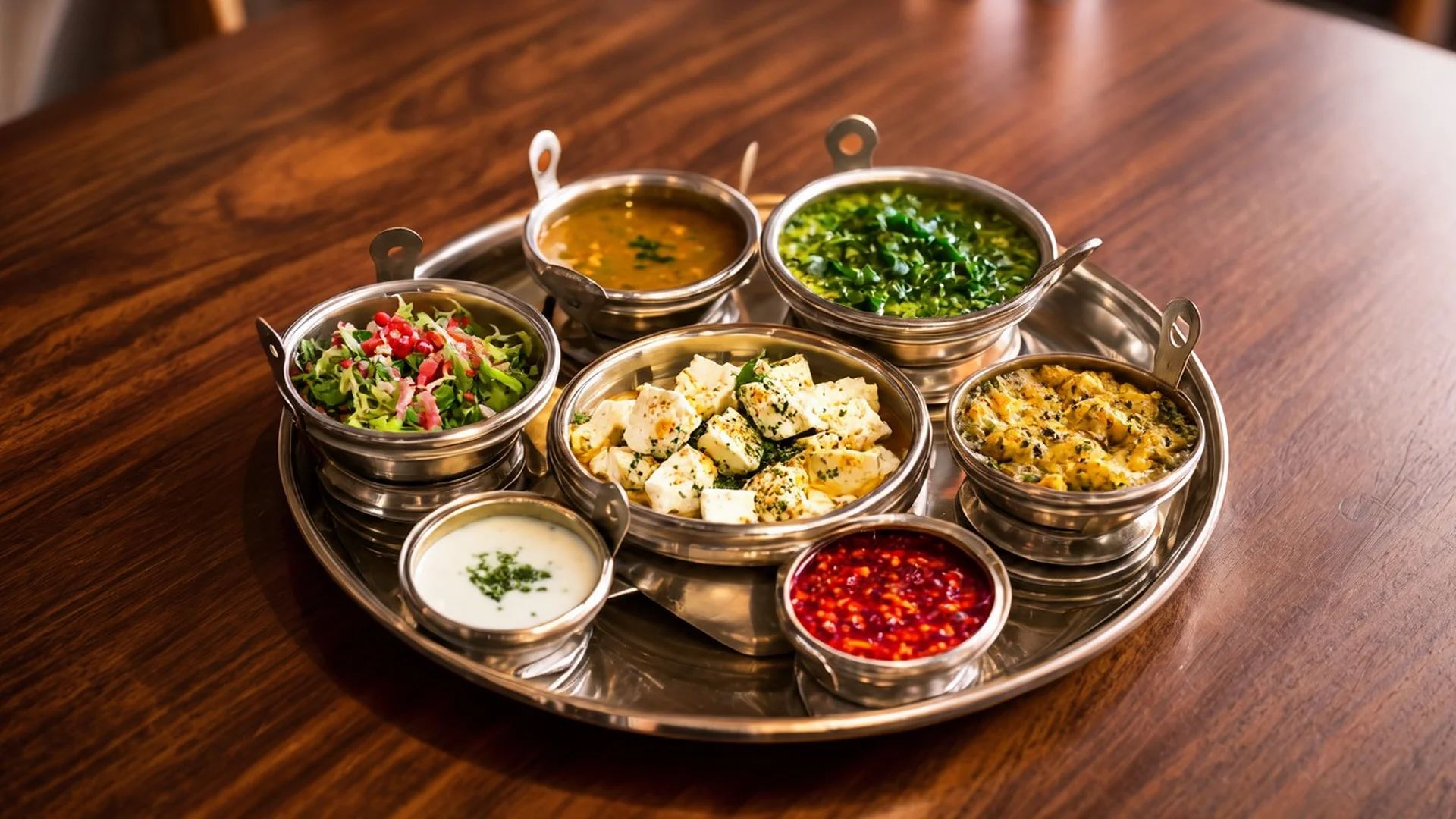
Almost every weight-loss decision in India gets priced on a 30-day impulse. A starter vial of generic semaglutide looks like ₹1,300 this month; a neighbourhood gym asks for ₹1,500 to sign up; and rewriting your daily kitchen thali sounds virtually free. Yet human metabolism does not operate on 30-day subscriptions. Weight lost in twelve weeks returns quickly unless the underlying mechanism—whether pharmacological appetite suppression, progressive muscular output, or daily calorie-and-protein structure—stays in place for years.
As of 21 November 2026, eight months after India’s March 2026 semaglutide patent expiry reshaped prescription pricing, putting all three pathways on an honest five-year (60-month) rupee ledger exposes three surprises:
- A continuous five-year generic pre-filled pen regimen runs past ₹4.19 lakh in out-of-pocket medical bills alone—before you pay for the strength training and protein required to protect muscle mass.
- Signing a five-year personal-training contract at a premium metro chain can quietly cost more than twice as much as prescription injections.
- An evidence-based ICMR-NIN Thali Reset is the only pathway that can pay for itself over 60 months once displaced weekend takeout and packaged snacks are counted.
1. The Diagnostic Framework: Why 90-Day Price Tags Hide Five-Year Biology
Comparing an injectable medication, a gym membership, and a kitchen overhaul fairly requires matching each pathway’s rupee structure to its multi-year clinical durability, rather than cherry-picking Week-12 before-and-after photos:
The Weight-Loss Jab (Continuous Pharmacological Signalling)
Following the 20 March 2026 patent expiry, CDSCO-approved generic semaglutide brought starter multi-dose vials down to ₹1,290–₹1,760 per month and starter pre-filled pens to ₹1,800–₹4,200 per month, while higher 1.7 mg–2.4 mg maintenance generic pens typically sit around ₹5,500–₹8,000 per month (versus up to ₹16,400 for originator pens). Its biological advantage is unmatched durability while active: in the landmark four-year SELECT trial (Nature Medicine, May 2024), adults on continuous semaglutide sustained a 10.2% mean body-weight reduction at four years alongside durable waist-circumference drops. Its structural catch, as detailed in OneMint’s breakdown Generic Semaglutide at ₹1,300–₹4,200 a Month: What the Low Price Doesn't Cover, is that stopping abruptly triggers rapid biological rebound—making the jab a multi-year recurring budget line rather than a one-time fix.
The Gym Track (Metabolic Insurance, Not a Standalone Fat-Loss Engine)
Across Indian cities in 2026, mid-range metro gyms typically quote ₹2,000–₹4,000 per month on short plans, dropping 20% to 40% on annual passes to roughly ₹13,690–₹18,000 per year (inclusive of the 5% GST applicable to gym memberships since September 2025), while standalone gym-floor personal training adds ₹5,000–₹8,000 per month and premium metro chain trainers charge ₹15,000–₹25,000 per month. Exercise alone rarely creates large calorie deficits without dietary changes, but progressive resistance training is non-negotiable for preserving skeletal muscle, protecting joints, and keeping resting metabolism strong over five years.
The ICMR-NIN Thali Reset (High Effort, Lowest Direct Rupee Cost)
According to the ICMR-National Institute of Nutrition (NIN) Dietary Guidelines for Indians 2024 and its "My Plate for the Day" reference framework, urban Indians consume roughly 998 kcal per day from cereals against the recommended 843 kcal (250 g raw cereals/millets), while eating only 119 kcal per day from pulses and legumes—less than half the recommended 274 kcal (85 g raw pulses). For weight management, ICMR-NIN advises trimming cereals and visible cooking oils first (stepping down toward 1,500–1,800 kcal) while keeping 400 g of vegetables and greens, 100 g of fresh fruit, 300 ml of milk/curd, and 75–85 g of pulses (or egg/fish/poultry equivalents) intact. In the gold-standard multi-year Look AHEAD trial (5,145 adults), an intensive diet-and-movement lifestyle intervention produced 8.6% mean weight loss at Year 1 and sustained 4.7% mean weight loss at Year 4 and Year 8, with 46% to 50.3% sustaining clinically meaningful weight loss of at least 5% and 23% to 26.9% sustaining at least 10%.
2. The Somatic, Clinical & Five-Year Financial Split Table
Before choosing where to commit household rupees for the next 60 months, compare all three pathways side by side across biology, friction, and clinical durability:
| Weight-Management Pathway | Core Biological Mechanism | Primary Everyday Somatic Friction | Multi-Year Clinical Evidence Benchmark | 5-Year Out-of-Pocket Rupee Range (India, 2026) | Biggest Hidden Financial Trap |
|---|---|---|---|---|---|
| 1A. Weight-Loss Jab (Generic Pre-Filled Pen, 2.4 mg Maintenance) | Gut-brain GLP-1 satiety signalling; slows gastric emptying | GI nausea during titration; lean-mass loss (approx. 39.7% in STEP 1 DEXA) if under-eating protein | 10.2% mean weight loss sustained at 4 years on continuous therapy (SELECT, 2024) | ₹4,19,700 medical-only (₹6,65,700 with required gym + protein floor) (OneMint calculation) | Budgeting ₹1,800 starter price instead of ₹6,500/mo maintenance + monitoring + protein |
| 1B. Weight-Loss Jab (Lower-Dose Generic Multi-Dose Vial) | Same active molecule at lower 0.5–1.0 mg maintenance (where clinically sufficient) | Manual syringe drawing error risk; strict 2°C–8°C home refrigeration | Dose-dependent reduction (lower than 2.4 mg trials if capped at 1.0 mg) | ₹1,59,680 medical-only (includes ₹200/mo sterile syringes + monitoring) (OneMint calculation) | Stopping early due to supply/cold-chain hassle and regaining two-thirds within 12 months |
| 2A. Self-Guided Mid-Range Gym (Annual Pass, No PT) | Muscle hypertrophy, GLUT4 insulin sensitivity, modest calorie burn | Commute friction (over 15 min distance kills attendance); soreness; form mistakes | Modest standalone fat loss (2%–4%), but strongest protector of lean muscle mass | ₹1,38,000 (annual pass incl. 5% GST + shoes/gear + local commute) (OneMint calculation) | Buying an upfront annual pass and abandoning it by Month 3 ("ghost membership" drag) |
| 2B. Gym + Personal Trainer (Year-1 Standalone vs. 5-Yr Chain PT) | Structured progressive overload + external appointment accountability | Rescheduling friction (travel/work causes approx. 23% missed sessions); supplement upsells | Higher adherence and strength retention; relies on diet for fat-loss scale drop | ₹2,16,000 (1-yr standalone PT) up to ₹10,68,000 (5-yr premium chain PT) (OneMint calculation) | Paying ₹15,000–₹25,000/mo chain PT markups where overhead—not coaching—takes the bulk |
| 3. ICMR-NIN Thali Reset (Kitchen & Portion Rebalance) | Direct energy-intake deficit + higher protein/fibre satiety | Daily grocery planning, family meal pushback, weekend social-eating fatigue | 4.7% mean loss sustained at Years 4 & 8; 46%–50.3% hold ≥5% (Look AHEAD) | ₹1,22,500 gross (−₹15,500 net savings after cutting 1 weekly delivery + snacks) (OneMint calculation) | Treating "healthy eating" as expensive imported kale/avocados instead of dal, curd, eggs & sarson |
 Progressive resistance training provides metabolic insurance by preserving lean muscle mass during weight management.
3. Worked Rupee Math: The Exact Five-Year (60-Month) Ledger for a 90 kg Adult
To keep the arithmetic strictly apples-to-apples, every figure below is modelled in constant November 2026 Indian Rupees (₹) across 60 months (5 years) for one 90 kg urban adult paying 100% out of pocket (standard Indian retail health insurance excludes obesity management).
Baseline Parameters & Assumptions (All Figures in INR)
- Track 1A — Supervised Generic Pre-Filled Pen (5 Years Continuous):
- Year 1 Titration & Monitoring: Drug ladder (2 mo × ₹1,800 + 1 mo × ₹3,600 + 1 mo × ₹5,500 + 8 mo × ₹6,500) = ₹64,700 + Year-1 clinical monitoring (1 initial consult ₹1,500 + 5 follow-ups × ₹1,000 + baseline lab ₹3,500 + 2 repeat labs × ₹2,500) = ₹15,000 → Year 1 = ₹79,700.
- Years 2 to 5 Maintenance (48 Months): Generic maintenance pen at ₹6,500/month (mid-range of ₹5,500–₹8,000 upper generic pen pricing) + semi-annual monitoring (2 doctor consults × ₹1,000 + 2 repeat lab panels × ₹2,500 = ₹7,000/year).
- Track 1B — Lower-Dose Generic Multi-Dose Vial (Where Clinically Maintained at 1.0 mg):
- Year 1: 2 mo × ₹1,300 + 10 mo × ₹1,760 + ₹2,400 sterile syringes = ₹22,600 + ₹15,000 monitoring = ₹37,600.
- Years 2 to 5 (48 Months): ₹1,760 vial + ₹200 syringes = ₹1,960/month + ₹7,000/year monitoring.
- Track 2 — Gym Membership (Mid-Range Metro Facility, Inclusive of 5% GST):
- Annual membership pass = ₹18,000/year (₹1,500/month effective annualised rate); gear/shoes replacement = ₹18,000 over 5 years (3 pairs of ₹4,000 training shoes + ₹6,000 apparel/mat); local commute = ₹6,000/year (150 visits × ₹40 round trip).
- Track 2B Add-On (12 Months Standalone Gym-Floor PT in Year 1 to Master Form):
- 12 months × ₹6,500/month = ₹78,000.
- Track 2C Contrast (Premium Chain Gym ₹24,000/yr + Continuous 5-Year Chain PT @ ₹15,000/mo):
- Plus ₹48,000 gear/commute over 5 years.
- Track 3 — ICMR-NIN Thali Reset (5 Years):
- Net daily whole-food protein & vegetable upgrade (adding 45 g extra pulses/soya, 100 g paneer or 3 eggs, 200 g extra seasonal vegetables/greens, and 20 g nuts/seeds while trimming 100 g refined cereals & excess cooking oil) = ₹1,800/month (approx. ₹60/day).
- One-time kitchen tools (digital food scale + oil dispenser/measuring katoris) = ₹1,500.
- Registered dietitian check-ins (3 sessions in Year 1 + 1 annual review Years 2–5 = 7 sessions × ₹1,000) = ₹7,000; annual preventive metabolic check-up (5 × ₹1,200) = ₹6,000.
- Realistic Food-Displacement Offset: Eliminating just one ₹450 weekend food-delivery order per week (approx. ₹1,800/month) plus ₹500/month of packaged snacks/sweetened drinks = ₹2,300/month displaced.
Plain-Text Formulas
5-Year Jab Total (Medical Only) = Year-1 (Drug + Monitoring) + [48 × Monthly Maintenance Drug] + [4 × Annual Monitoring]
5-Year Self-Guided Gym Total = (5 × Annual Membership) + 5-Yr Gear + (5 × Annual Commute)
5-Year Gross Thali Reset Total = (60 × Monthly Grocery Upgrade) + Kitchen Tools + Dietitian Visits + Annual Labs
5-Year Net Thali Reset Total = Gross Thali Reset Total − (60 × Monthly Takeout & Snack Displacement)
Cost per Sustained Kilogram = 5-Year Total Outlay ÷ (Starting Weight 90 kg × Sustained Loss %)
Line-by-Line Arithmetic
Track 1A — Supervised Generic Pre-Filled Pen (Medical Only, 5 Years):
- Year 1: ₹64,700 + ₹15,000 = ₹79,700 (OneMint calculation).
- Years 2–5 Drug Cost: 48 months × ₹6,500 = ₹3,12,000 (OneMint calculation).
- Years 2–5 Monitoring: 4 years × ₹7,000 = ₹28,000 (OneMint calculation).
- 5-Year Total (Medical Only): ₹79,700 + ₹3,12,000 + ₹28,000 = ₹4,19,700 (₹6,995/month average) (OneMint calculation).
- With Mandatory Muscle-Protection Floor (+₹1,38,000 Self-Guided Gym + ₹1,08,000 Protein Grocery Upgrade): ₹4,19,700 + ₹2,46,000 = ₹6,65,700 (₹11,095/month) (OneMint calculation).
Advertisement
Lower-Dose Generic Vial Alternative (Track 1B, Medical Only):
- ₹37,600 + (48 × ₹1,960 = ₹94,080) + ₹28,000 = ₹1,59,680 (₹2,661/month) (OneMint calculation).
Track 2 — Gym Pathway (5 Years):
- Track 2A (Self-Guided Mid-Range Metro Gym): (5 × ₹18,000 = ₹90,000) + ₹18,000 (gear) + (5 × ₹6,000 = ₹30,000) = ₹1,38,000 (₹2,300/month) (OneMint calculation).
- Track 2B (Mid-Range Gym + Year-1 Standalone PT): ₹1,38,000 + ₹78,000 = ₹2,16,000 (₹3,600/month) (OneMint calculation).
- Track 2C (Premium Chain Gym + Continuous 5-Year Chain PT): (5 × ₹24,000 = ₹1,20,000) + (60 × ₹15,000 = ₹9,00,000) + ₹48,000 = ₹10,68,000 (₹17,800/month — 2.54× the medical cost of generic pens) (OneMint calculation).
Track 3 — ICMR-NIN Thali Reset (5 Years):
- 60-Month Whole-Food Protein/Produce Upgrade: 60 × ₹1,800 = ₹1,08,000 (OneMint calculation).
- Support & Verification: ₹1,500 (tools) + ₹7,000 (dietitian) + ₹6,000 (annual labs) = ₹14,500 (OneMint calculation).
- 5-Year Gross Outlay (Before Displacement): ₹1,08,000 + ₹14,500 = ₹1,22,500 (₹2,042/month) (OneMint calculation).
- 60-Month Displaced Takeout & Snack Spend: 60 × ₹2,300 = ₹1,38,000 saved (OneMint calculation).
- 5-Year Net Cash Outlay (After Displacement): ₹1,22,500 − ₹1,38,000 = −₹15,500 (household ends up ₹15,500 richer) (OneMint calculation).
Track 4 — The Realistic Non-Drug Hybrid (Thali Reset + Self-Guided Gym):
- Gross 5-Year Combined Cost: ₹1,22,500 + ₹1,38,000 = ₹2,60,500 (₹4,342/month); ₹1,22,500 net after takeout displacement (OneMint calculation).
Cost Per Sustained Kilogram at Year 4–5 (90 kg Starting Weight):
- Continuous Generic Pen (SELECT 10.2% mean = 9.18 kg sustained): ₹4,19,700 ÷ 9.18 kg = ₹45,719 per sustained kg medical-only (₹72,516/kg with gym + protein floor) (OneMint calculation).
- Thali + Gym Hybrid at Look AHEAD Mean (4.7% = 4.23 kg sustained): ₹2,60,500 ÷ 4.23 kg = ₹61,584/kg gross (₹28,960/kg net after takeout savings) (OneMint calculation).
- Thali + Gym Hybrid for High-Adherence Responders (Top Quartile ≥10% = 9.00 kg sustained): ₹2,60,500 ÷ 9.00 kg = ₹28,944/kg gross (₹13,611/kg net after takeout savings) (OneMint calculation).
[!NOTE] Variance Callout: Over five years, a supervised generic semaglutide pen regimen costs ₹4,19,700 medically—3.04× a self-guided gym (₹1,38,000) and 3.43× a gross ICMR-NIN Thali Reset (₹1,22,500)—while pairing a Thali Reset with a self-guided gym costs ₹2,60,500 gross (₹1,22,500 net after cutting one weekly delivery order), saving ₹4,05,200 over five years compared to running the generic pen alongside the muscle-protection floor (₹6,65,700) (OneMint calculation).
[!IMPORTANT] Tax & Inflation Note: Constants used are constant November 2026 Indian Rupees (₹), 5% GST baked into gym memberships, and zero price escalation. With Indian CPI inflation running near 5.5%–5.8% (see Your Personal Inflation Rate Isn't 5.54%: Build It From Three Months of Bills), nominal Years 2–5 bills for gym renewals and groceries will rise roughly 12%–15% cumulatively, whereas generic pharmaceutical prices could soften further under domestic competition. Under the Income Tax Act 2025 Section Translator (Effective 1 April 2026), only preventive diagnostic blood panels fit within the ₹5,000 Section 126 sub-limit (exclusively if you opt out of the Section 202 Default New Tax Regime)—gym fees, groceries, and weight-loss drugs carry zero income-tax deduction.
4. The Reality Check: Epistemic Honesty, Drop-Off Rates, and What We Don't Know Yet
Spreadsheets assume 100% consistency for 60 straight months. Real human behaviour does not:
- The "Ghost Gym" Tax: Fitness industry data consistently shows steep drop-offs after January and post-festive sign-ups. Paying ₹18,000 a year for a mid-range gym you visit twice a month costs ₹750 per workout—whereas visiting 150 times a year drops the exact same membership to ₹120 per workout (OneMint calculation). A cheaper neighbourhood gym within 10 minutes of home almost always outperforms a ₹30,000 luxury club 35 minutes away in traffic.
- The Jab Also Cuts Food Bills—Partially: Patients on semaglutide frequently eat 20% to 35% fewer calories and order far less late-night takeout or alcohol. For an urban diner currently spending ₹8,000–₹10,000 a month on restaurants and delivery, slashing eating-out bills by ₹3,000–₹4,000 a month can meaningfully offset a lower-dose vial or intermediate pen—though shifting the remaining smaller meals toward denser protein still costs money.
- The Three Pathways Are Not Mutually Exclusive: Framing them as "Jab versus Gym versus Thali" is useful for budgeting, but biologically they do different jobs. The Thali Reset controls energy intake; the Gym preserves muscle and metabolic rate; and the Jab (for clinically eligible patients prescribed by a physician) lowers the biological hunger barrier that makes sustaining a Thali Reset difficult.
What We Don't Know Yet
- Five-Year Price Curve of Indian Generic GLP-1s (2027–2031): With eight-plus CDSCO-approved domestic manufacturers competing aggressively since March 2026, upper-dose 2.4 mg generic pen prices (currently approx. ₹5,500–₹8,000/month) could compress further over the next two to three years—potentially narrowing the five-year gap modeled above.
- Real-World Indian Persistence Beyond 24 Months: Both SELECT and Look AHEAD ran with intensive structured clinical follow-ups. Five-year adherence rates among self-paying Indian outpatients juggling winter smog, work travel, and festival calendars have not yet been measured in post-patent Indian cohorts.
5. What This Does NOT Mean
[!WARNING]
Critical Scope Clarifications
- It does NOT mean clinical obesity is purely a willpower problem solved by a cheap thali: For adults with severe obesity, stubborn Type 2 diabetes, or high cardiovascular risk who have repeatedly regained weight despite structured lifestyle efforts, a physician-prescribed GLP-1 therapy can be clinically justified regardless of its higher five-year rupee cost.
- It does NOT mean a ₹15,000/month personal trainer is always wasted money: Hiring a skilled independent coach for 3 to 6 months (₹19,500–₹39,000 total) to learn safe barbell/dumbbell mechanics and protect knees or lower backs can save years of injury downtime—the waste lies in staying dependent on ₹15,000–₹25,000/month chain PT contracts for five uninterrupted years.
- It does NOT mean you should stop prescribed medication to save money: Never alter or discontinue prescription diabetes or obesity medication without consulting your endocrinologist or physician.
6. Low-Barrier Execution Menu: Sequencing Your Five-Year Spend Without Wasting Lakhs
Instead of committing ₹4 lakh to injections or ₹1.8 lakh to a premium trainer on Day 1, sequence your spending in three gated 90-day layers:
Layer 1 (Days 1–90): Lock In the ICMR-NIN Thali Reset First (Budget: ₹1,500 Tools + Zero Extra Net Cash)
Buy a ₹600 kitchen scale for two weeks simply to eyeball what 250 g raw cereals (cut to 150–200 g for fat loss), 85 g raw pulses, 400 g seasonal vegetables, and 4–5 teaspoons of cooking oil actually look like in your own kitchen katoris. Use budget-friendly winter greens (sarson, methi, palak—see OneMint’s Kale Costs ₹40 a Bunch. Sarson Doesn't: The Cost-Per-Nutrient Case for Winter Greens) alongside curd, eggs, paneer, or soya chunks, and cut one weekly delivery order to make the upgrade self-funding.
Layer 2 (Days 31–180): Prove the Habit Before Signing an Annual Gym Pass
Start with a 1-to-3-month pass at a clean gym within 15 minutes of your home (or two home resistance-band/dumbbell sessions plus daily post-meal walks during high-AQI months—see Smog and Blood Sugar: Why Fasting Glucose Rises in a North India Winter). Only upgrade to the cheaper 12-month pass—or hire a standalone trainer for 3–6 months of form coaching—once you prove you show up three days a week for 60 consecutive days.
Layer 3: Physician-Guided Escalation (If Clinically Indicated)
Check your baseline ratio on the OneMint BMI Calculator, get your baseline metabolic panel (FPG, HbA1c, Fasting Insulin/HOMA-IR, Lipids) reviewed by an endocrinologist, and stress-test a realistic 24-to-60-month medical budget on the OneMint Financial Health Quiz before starting prescription GLP-1 therapy—never relying on a starter-month ₹1,300 quote alone.
Primary Sources & References (Verified as of 21 November 2026)
- Nature Medicine (SELECT Trial 4-Year Outcomes): Ryan DH, Lingvay I, Deanfield J, et al. Long-term weight loss effects of semaglutide in obesity without diabetes in the SELECT trial (13 May 2024; PMID: 38740993) — 10.2% mean sustained weight loss at 4 years.
- Obesity / NIH PMC (Look AHEAD Research Group): Four-Year Weight Losses in the Look AHEAD Study (PMC3183129, 2011) and Eight-Year Weight Losses with an Intensive Lifestyle Intervention (PMC3904491, Jan 2014) — 8.6% Year-1 loss and 4.7% mean sustained loss at Years 4 & 8 (46%–50.3% ≥5% loss; 23%–26.9% ≥10% loss).
- ICMR – National Institute of Nutrition (NIN): Dietary Guidelines for Indians (2024 Revised Edition) (nin.res.in) and "My Plate for the Day" 2,000 kcal / 72 g protein reference breakdown.
- Indian Generic Semaglutide & Fitness Market Benchmarks (2026): November 2026 Indian post-patent semaglutide vial/pen pricing trackers (DermaVue, 9 Nov 2026; Totall, 15 Sep 2026); 2026 Indian city-wise gym membership, 5% GST, and personal trainer fee benchmarks (ManageYourGym / Deloitte–HFA average, Aug 2026; YourTrainer, Jul 2026; BookASloth / UrbanPro, Oct 2026).
- Central Board of Direct Taxes (CBDT): The Income Tax Act, 2025 (Tax Year 2026-27) — Section 126 preventive check-up limit and Section 202 Default New Tax Regime.
Advertisement