

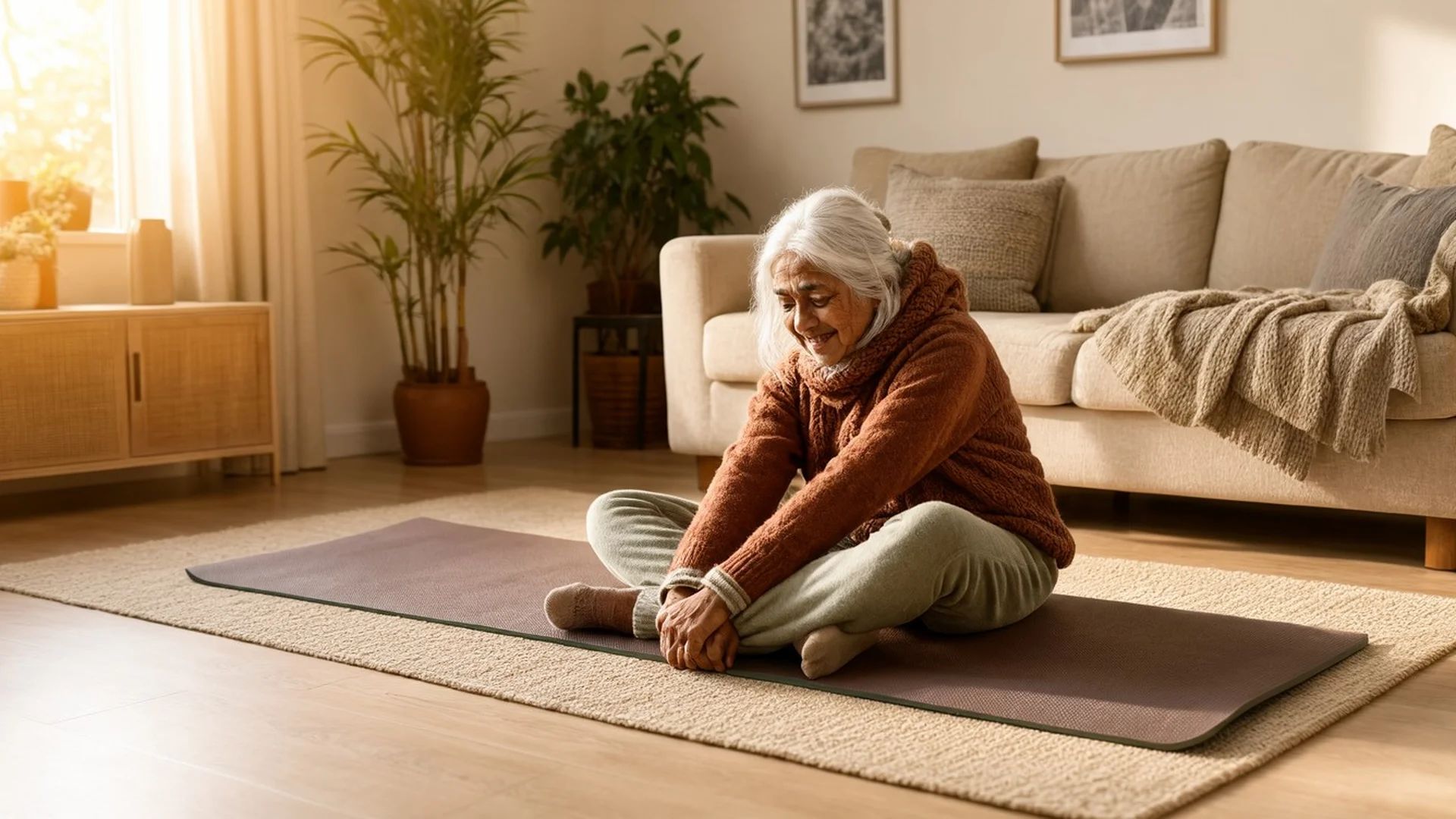
Every November across Punjab, Haryana, Delhi-NCR, and the northern plains, the exact same complaint echoes up staircases and across morning tea tables: knees that felt perfectly fine in September suddenly feel stiff, creaky, and heavy the moment you step onto a cold floor. Most households blame "the chill" and reach straight for heating balms, heavy woollen knee caps, or unprescribed painkillers—while quietly cancelling their morning walks until March.
As of 21 November 2026, with North Indian urban air quality hovering deep inside the Central Pollution Control Board’s (CPCB) Poor to Very Poor range (well above the World Health Organization’s 24-hour PM2.5 guideline of 15 µg/m³) just as night temperatures slide into single and low-double digits, clinical rheumatology and orthopaedic evidence points to a far more interconnected picture.
Cold air is only one leg of a three-part winter squeeze: plummeting temperatures thicken joint lubrication, inhaled fine particulate smog amplifies systemic inflammation, and haze-blocked winter sunlight drives Vitamin D toward its annual trough—all hitting weight-bearing knees at the exact same weeks. Treating all three mechanisms together takes less money and far less guesswork than buying a shelf full of over-the-counter fixes.
1. The Diagnostic Framework: Four Pillars Hitting Indian Knees Every Winter
To fix winter knee ache without wasting money or aggravating cartilage, separate the four distinct biological and behavioural stressors colliding between November and February:
Cold Temperatures and Barometric Pressure Shifts (Fluid Viscosity & Vessel Tightening)
Your knee joint is cushioned by a thin envelope of synovial fluid—a biological shock absorber that lubricates cartilage surfaces. When ambient temperatures drop, peripheral blood vessels constrict to preserve core body heat, reducing warm blood flow to tendons, ligaments, and joint capsules around the knee. Cooler joint environments slightly increase synovial fluid viscosity (making the joint feel physically "thicker" and slower to glide on first movement), while subtle drops in atmospheric barometric pressure ahead of winter western disturbances allow mildly irritated joint tissues to expand slightly against sensitive nerve endings.
PM2.5 Winter Smog as a Systemic Inflammatory Trigger
Most residents associate air pollution solely with coughs or watery eyes, yet fine particulate matter smaller than 2.5 micrometres penetrates deep alveolar walls and triggers systemic oxidative stress throughout the bloodstream. Peer-reviewed rheumatology and environmental-health research consistently links sustained spikes in ambient PM2.5 with elevated pro-inflammatory signalling molecules (including C-reactive protein and inflammatory cytokines) and higher rates of joint pain flares—particularly in adults with underlying knee osteoarthritis or inflammatory arthritis. Just as OneMint documented in Smog and Blood Sugar (North India Winter 2026): Why Fasting Glucose Rises in Polluted Cold Air, and What to Test in December, winter haze acts as a whole-body inflammatory multiplier, not just a lung irritant.
The Winter Vitamin D Trough and Muscle Shock-Absorber Weakness
Even in sunny tropical India, clinical surveys consistently report widespread adult Vitamin D insufficiency and deficiency (commonly estimated around 70% to 80% of urban Indian adults). Between November and January, three factors push serum 25-hydroxy Vitamin D even lower: a shallower winter sun angle, thick particulate haze filtering ultraviolet-B (UVB) rays, and full-sleeve sweaters covering exposed skin. Low Vitamin D impairs calcium handling in subchondral bone and weakens neuromuscular tone in the quadriceps and gluteal muscles—the exact muscular shock absorbers that offload mechanical impact away from your knee cartilage on every step.
The "Lost Walk" Stagnation Loop
Joint cartilage has no direct blood supply. It stays nourished and springy through rhythmic mechanical compression—squeezing fluid out and drawing fresh nutrients in as you walk and bend your knee. When cold fog and 300-plus AQI force people off morning walks without an indoor movement substitute, synovial circulation stalls, quadriceps muscles decondition within weeks, and morning stiffness worsens sharply.
2. The Somatic & Behavioral Table: Decoding Your Knee Signal Before Buying a Fix
Not all winter knee pain behaves the same way. Before applying a heat patch or popping a painkiller, match your daily somatic pattern to its likely driver and targeted micro-antidote:
| Everyday Winter Knee Signal | Most Likely Primary Driver | Clinical Red-Flag Boundary to Watch | Targeted Low-Barrier Micro-Antidote |
|---|---|---|---|
| Stiff, "rusty" knees for 10–25 minutes on waking that ease after a warm shower | Cold-induced synovial viscosity + mild mechanical wear + overnight immobility | Normal mechanical pattern; consult a doctor if pain steadily worsens week over week | Do 3 minutes of ankle pumps and heel slides under the quilt before standing on cold tiles |
| Deep, throbbing knee ache worsening on heavy smog days even indoors | Systemic PM2.5 inflammatory amplification + sedentary indoor stagnation | Consult a physician if accompanied by visible swelling or elevated systemic inflammation | Keep bedroom doors sealed at night with HEPA filtration; add two 10-minute indoor walks daily |
| Sharp front-of-knee ache when climbing or descending stairs, or rising from low seats | Deconditioned quadriceps/glutes + excess patellofemoral load + possible low Vitamin D | Seek orthopaedic evaluation if the knee locks, catches, or suddenly "gives way" | Train 10–15 slow chair sit-to-stands daily to rebuild muscular shock absorption |
| Dull, diffuse bone and thigh fatigue paired with low mood and leg cramps | Seasonal Vitamin D trough + low dietary protein/calcium intake | Verify via blood test; never blind-dose mega Vitamin D without checking baseline levels | Get a baseline 25-OH Vitamin D blood draw; pair doctor-guided dosing with dal, curd, eggs & sarson |
| Morning stiffness lasting 45–60+ minutes with hot, red, visibly swollen joints | Potential inflammatory arthritis (such as rheumatoid arthritis) or gout flare | Urgent medical review required—do not rely on balms, stretches, or home remedies alone | Book an immediate physician or rheumatologist assessment; avoid forcing painful deep squats |
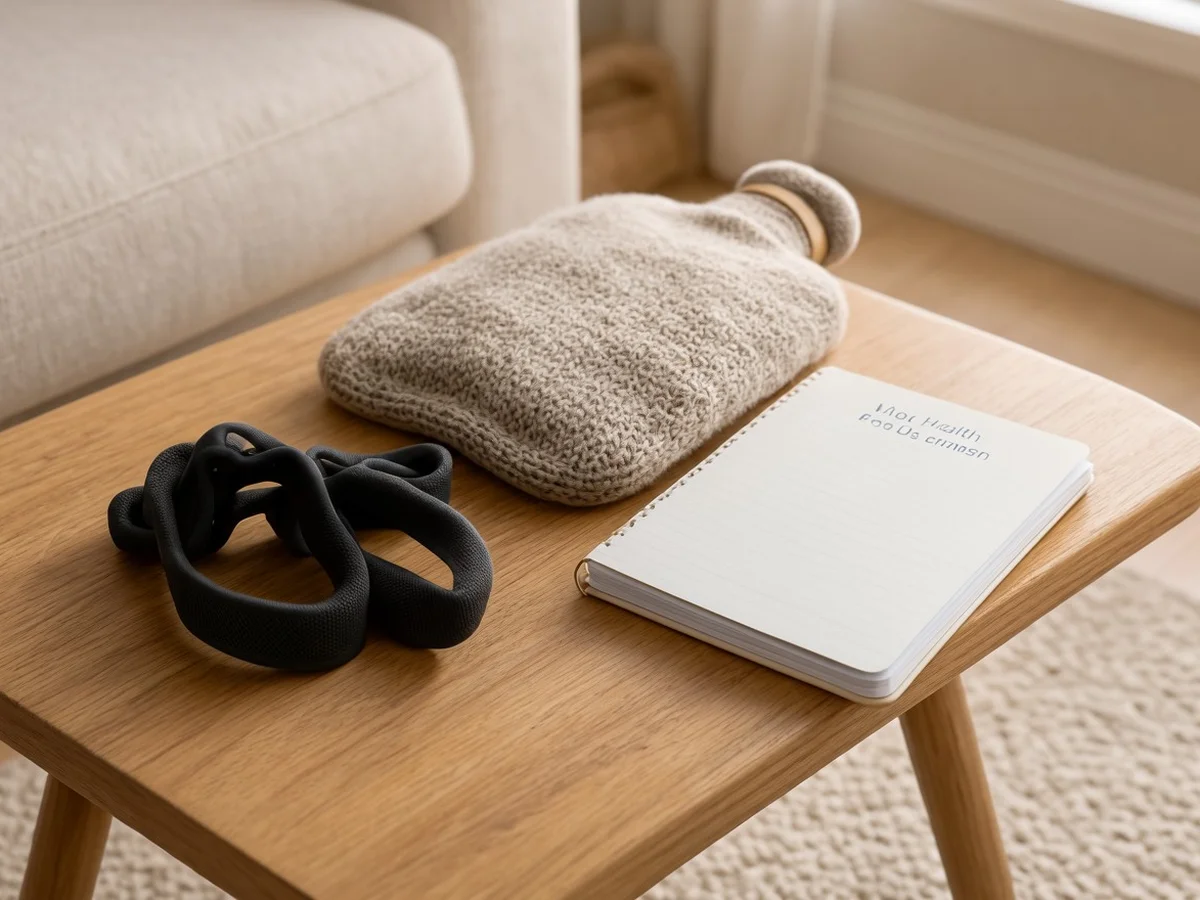 A targeted home kit with simple resistance bands and gentle heat therapy builds lasting muscular joint protection for a fraction of the cost of ad-hoc supplements.
3. Worked Rupee Math: Targeted Evidence-Based Winter Care vs. Ad-Hoc Over-the-Counter Spending
Winter joint pain triggers an expensive reflex in Indian households: stacking topical heating gels, advertised herbal joint powders, unregulated collagen tubs, magnetic knee braces, and unprescribed weekly Vitamin D sachets—often spending nearly ₹20,000 over four winter months without ever testing a single biomarker or building knee strength.
Here is the honest four-month (November–February) rupee comparison.
Baseline Parameters & Assumptions (November 2026 Indian Metro/Tier-1 Benchmarks, All Figures in INR)
- Season Length: 4 peak winter months (November, December, January, and February).
- Pathway A — Reactive Ad-Hoc Winter Spend (Zero Diagnosis, Zero Strength Plan):
- Topical pain-relief gels, heat sprays, herbal joint-oil blends, and generic compression/magnetic wraps: ₹1,800/month × 4 months.
- Self-purchased multi-ingredient joint/collagen/calcium supplement tubs bought without testing: ₹2,200/month × 4 months.
- Reactive unscheduled clinic visits + short courses of OTC oral painkillers/gastric antacids after flare-ups: 2 episodes × ₹1,500.
- Pathway B — Targeted Evidence-Based Winter Knee Plan (Diagnose First, Strengthen Once):
- Initial Orthopaedic or General Physician Clinical Assessment: ₹1,200.
- Targeted Winter Joint Blood Panel at an NABL-accredited laboratory: 25-OH Vitamin D (₹950) + Serum Calcium (₹250) + hs-CRP (₹520) + ESR & Serum Uric Acid (₹480) + Home Phlebotomy Fee (₹150) = ₹2,350.
- Doctor-Prescribed Generic Correction (illustrative 4-month course of generic cholecalciferol / basic calcium only if deficiency is confirmed on lab report): ₹600.
- 4 Supervised Physiotherapy Assessment & Form Sessions (to build a personalised, joint-safe home quadriceps and glute programme @ ₹800/session): 4 × ₹800 = ₹3,200.
- One-Time Home Thermal & Resistance Kit (loop resistance bands + simple warm neoprene/woollen knee sleeve + rubber hot-water bag): ₹1,450.
- Optional Income Tax Act, 2025 Check (Tax Year 2026-27): Preventive diagnostic blood tests qualify within the ₹5,000 aggregate preventive health check-up sub-limit under Section 126 strictly for taxpayers opting out of the Default New Tax Regime (Section 202) (illustrated at the 30% slab + 4% cess = 31.20%).
Plain-Text Formulas
Pathway A Total (Reactive) = (4 × Topical/Wrap Spend) + (4 × Blind Supplements) + (2 × Reactive Flare Visits)
Targeted Lab Panel Cost = Vitamin D + Calcium + hs-CRP + ESR/Uric Acid + Home Collection
Pathway B Total (Targeted) = Physician Consult + Lab Panel + Generic Correction + (4 × Physio) + Home Kit
Net Winter Savings = Pathway A Total − Pathway B Total
Savings Percentage = (Net Winter Savings ÷ Pathway A Total) × 100
Old-Regime Section 126 Tax Offset = Lab Panel Cost × 31.20%
Line-by-Line Arithmetic
Pathway A — Reactive Ad-Hoc Spending Over 4 Winter Months:
- Topical gels, oils & wraps: 4 × ₹1,800 = ₹7,200 (OneMint calculation).
- Unverified joint/collagen supplement tubs: 4 × ₹2,200 = ₹8,800 (OneMint calculation).
- Two reactive clinic + painkiller/antacid flare episodes: 2 × ₹1,500 = ₹3,000 (OneMint calculation).
- Pathway A 4-Month Total: ₹7,200 + ₹8,800 + ₹3,000 = ₹19,000 — leaving you with zero lab baseline and zero lasting muscular protection for next winter (OneMint calculation).
Advertisement
Pathway B — Targeted Evidence-Based Winter Knee Plan:
- Targeted NABL Lab Panel: ₹950 + ₹250 + ₹520 + ₹480 + ₹150 = ₹2,350 (OneMint calculation).
- Clinical Assessment + Generic Correction: ₹1,200 + ₹600 = ₹1,800 (OneMint calculation).
- 4 Guided Physiotherapy Form Sessions: 4 × ₹800 = ₹3,200 (OneMint calculation).
- One-Time Home Mobility & Thermal Kit: ₹1,450.
- Pathway B 4-Month Total: ₹2,350 + ₹1,800 + ₹3,200 + ₹1,450 = ₹8,800 (OneMint calculation).
Direct Cash Savings & Repeat-Winter Advantage:
- Four-Month Cash Saved: ₹19,000 − ₹8,800 = ₹10,200 saved (53.7% lower outlay) (OneMint calculation).
- Optional Old-Regime Section 126 Tax Offset on the ₹2,350 Preventive Lab Panel (at 31.20% slab): ₹2,350 × 0.3120 = ₹733, reducing net effective spend to ₹8,067 (OneMint calculation).
- Next-Winter Recurring Cost: Because your home kit and physiotherapy exercise sequence carry over, repeat winter outlay drops to roughly ₹2,950–₹3,500 for a quick repeat Vitamin D check and maintenance (OneMint calculation).
[!NOTE] Variance Callout: Replacing ₹19,000 of ad-hoc winter balms, blind collagen tubs, and reactive flare visits with a targeted ₹8,800 plan—one physician evaluation, a ₹2,350 NABL blood panel, four physiotherapy form sessions, and a home resistance kit—saves ₹10,200 (53.7%) in a single winter while leaving you with a permanent, drug-free strengthening routine (OneMint calculation).
[!IMPORTANT] Tax & Price Note: Constants used are representative November 2026 Indian metro/tier-1 clinic, physiotherapy, and NABL diagnostic lab prices (tier-2 cities often run 15%–25% lower), and zero brand or clinic chain preference. Under Section 202 of the Income Tax Act 2025 Section Translator (Effective 1 April 2026) (Default New Tax Regime), preventive check-up deductions under Section 126 do not apply.
4. The Reality Check: Limits, Painkiller Traps, and What We Don't Know Yet
Three clinical realities matter far more than any viral "winter knee hack":
- The Silent Danger of Daily Over-the-Counter Painkillers (NSAIDs): When knees ache through December and January, many older adults swallow over-the-counter non-steroidal anti-inflammatory tablets (NSAIDs) several times a week to stay mobile. Combined with lower winter water intake (people drink noticeably less water when it is cold), frequent unsupervised NSAID use irritates the stomach lining and stresses kidney filtration—especially in adults who also have borderline blood sugar or high blood pressure. Never treat oral painkillers as a daily winter maintenance tool without a physician’s oversight.
- The Blind Vitamin D Toxicity Risk: Because Vitamin D deficiency is so widespread in India, many households swallow high-dose 60,000 IU weekly capsules continuously for six to twelve months without re-testing. Vitamin D is fat-soluble and accumulates in body tissue; unsupervised prolonged mega-dosing can trigger hypervitaminosis D and elevated blood calcium, risking kidney stones and fatigue. Always test first, follow your doctor’s defined loading duration, and step down to a medically guided maintenance dose.
- Weight Load Multiplies Inside the Knee: Biomechanical gait studies show that every extra 1 kilogram of body weight places roughly 3 to 4 kilograms of compressive force across the knee joint during level walking—and even more on stairs. That is why modest, sustainable weight management (see OneMint’s Weight-Loss Jab vs. Gym vs. Thali Reset (India 2026): The True Five-Year Cost of Each in Rupees) often delivers larger long-term knee relief than any topical ointment.
What We Don't Know Yet
- Why Barometric Pressure Affects Some Knees Strongly and Others Not at All: Large observational weather-and-pain studies show mixed individual sensitivity—some adults feel measurable aches hours before a cold front arrives, while others with identical knee X-rays notice zero weather correlation. Researchers have not yet isolated a single universal sensory receptor explaining this individual gap.
- Long-Term Indian Cohort Data Separating Smog From Cold: Because North India’s peak PM2.5 smog months (November through January) overlap almost completely with its coldest temperatures and lowest UVB sunlight, isolating the exact percentage of winter knee pain attributable purely to PM2.5 versus cold versus low Vitamin D in Indian urban populations remains an active area of clinical research.
5. What This Does NOT Mean
[!WARNING]
Critical Scope Clarifications
- It does NOT mean cold weather "causes" arthritis: Cold air and smog can temporarily heighten stiffness and pain signalling in an already sensitive or worn joint, but stepping out into winter air does not permanently damage healthy knee cartilage.
- It does NOT mean Vitamin D tablets alone rebuild worn cartilage: Correcting a confirmed Vitamin D deficiency supports bone metabolism and muscular steadiness, but it cannot substitute for progressive quadriceps and hip strengthening.
- It does NOT mean complete bed rest heals stiff winter knees: Unless a doctor prescribes short-term rest for an acute injury or hot, swollen flare, staying immobile under a blanket all week slows synovial fluid exchange and makes the knee stiffer when you finally stand up.
6. Low-Barrier Execution Menu: Five Everyday Winter Knee Habits
You do not need an expensive gym contract or invasive procedures to take the edge off winter stiffness. Pair one clean diagnostic check with five friction-free daily habits:
1. Run the 3-Minute "Under the Blanket" Wake-Up Sequence
Before swinging your legs onto cold marble or tiled floors each morning, stay lying down and perform 15 slow ankle pumps, 10 gentle heel slides (sliding each heel toward your hip and back out), and 10 isometric quad squeezes (pressing the back of your knee gently into the mattress for 5 seconds). This warms synovial fluid before your body weight loads the joint.
2. Use Gentle Dry or Moist Heat for Morning Stiffness—Not Ice
For routine cold-weather stiffness without visible redness or heat, a 10-minute warm shower or hot-water bag wrapped in a towel increases local blood flow and eases tissue tightness immediately. Reserve ice packs strictly for acute, hot, visibly swollen joints after an injury or flare (and check with a doctor if swelling persists).
3. Keep Moving Indoors When AQI Exceeds 200
Do not abandon daily leg movement when morning AQI sits in the Poor or Very Poor zone—and do not force brisk outdoor walks through heavy smog either. Swap outdoor strolls for two 10-minute indoor hallway walks plus 2 sets of 10 controlled sit-to-stands from a sturdy dining chair (keeping knees aligned over toes, avoiding deep pain-provoking squats). If you live in a coastal metro dealing with humid haze instead of dry cold, pair this routine with OneMint’s Mumbai's Air Now Beats Delhi's for Worse (Oct–Nov 2026 Data): Why Coastal AQI Behaves Differently and What to Do About It.
4. Layer Your Legs and Protect Your Bedroom Air
Most Indians bundle their torso in heavy jackets while wearing thin cotton pyjamas that leave knee joints chilled on evening walks or two-wheeler rides. Wearing thermal leggings under trousers keeps peripheral joint circulation steady, while sealing bedroom gaps and running HEPA filtration during sleep reduces overnight PM2.5 inflammatory load (compare indoor filtration costs in Air Purifier, N95 or Doing Nothing? (Smog Season 2026): The Rupee-Per-Clean-Hour Maths for North India's Winter Air).
5. Anchor Nutrition With Calcium, Protein & Seasonal Greens—Then Track Your Baseline
Support muscle and bone maintenance with ordinary winter staples—curd, paneer, dal, eggs, sesame (til), and indigenous winter greens like methi and sarson (see OneMint’s Kale Costs ₹40 a Bunch. Sarson Doesn't: The Cost-Per-Nutrient Case for Winter Greens). Pair your December blood draw with OneMint’s Smog and Blood Sugar (North India Winter 2026): Why Fasting Glucose Rises in Polluted Cold Air, and What to Test in December testing window, check your weight-to-height ratio on the OneMint BMI Calculator, and review your annual out-of-pocket medical buffer with the OneMint Financial Health Quiz.
Primary Sources & References (Verified as of 21 November 2026)
- World Health Organization (WHO) & Central Pollution Control Board (CPCB): WHO 2021 Global Air Quality Guidelines (15 µg/m³ 24-hour PM2.5 benchmark) and CPCB National Air Quality Index (NAQI) health-advisory tiers (cpcb.nic.in).
- Peer-Reviewed Rheumatology & Environmental Health Literature: Clinical consensus on ambient PM2.5 exposure, systemic inflammatory cytokines (IL-6, TNF-alpha, hs-CRP), and arthritis/musculoskeletal pain flares; biomechanical studies on joint load amplification (approx. 3×–4× body weight per step) and synovial fluid lubrication mechanics.
- ICMR – National Institute of Nutrition (NIN): Dietary Guidelines for Indians (2024) (nin.res.in) — Calcium, protein, and Vitamin D nutritional baselines across Indian adults, and clinical surveys documenting widespread adult Vitamin D insufficiency in urban India.
- Central Board of Direct Taxes (CBDT): The Income Tax Act, 2025 (effective 1 April 2026 for Tax Year 2026-27) — Section 126 (₹5,000 preventive health check-up sub-limit for Old Regime taxpayers) and Section 202 (Default New Tax Regime) (incometax.gov.in).
- Indian Outpatient Clinic, Physiotherapy & NABL Diagnostic Benchmarks (November 2026): Representative metro/tier-1 consultation, physiotherapy session, and standalone blood-panel pricing (25-OH Vitamin D, Calcium, hs-CRP, ESR/Uric Acid).
Advertisement